
You hear an unfamiliar grinding sound coming from the back of your LG refrigerator. Then the sound stops completely. Inside, the fridge feels warmer than usual. The freezer starts to thaw. Within hours, your ice cream is soft and your food is at risk.
An LG compressor failure is one of the most serious problems a refrigerator can develop — and it’s completely silent at first, then suddenly catastrophic.
The compressor is literally the heart of your refrigeration system. It circulates refrigerant through coils that cool your fridge and freezer. When it fails, nothing else in the appliance matters. No cooling power means lost food, wasted money, and a major repair bill.
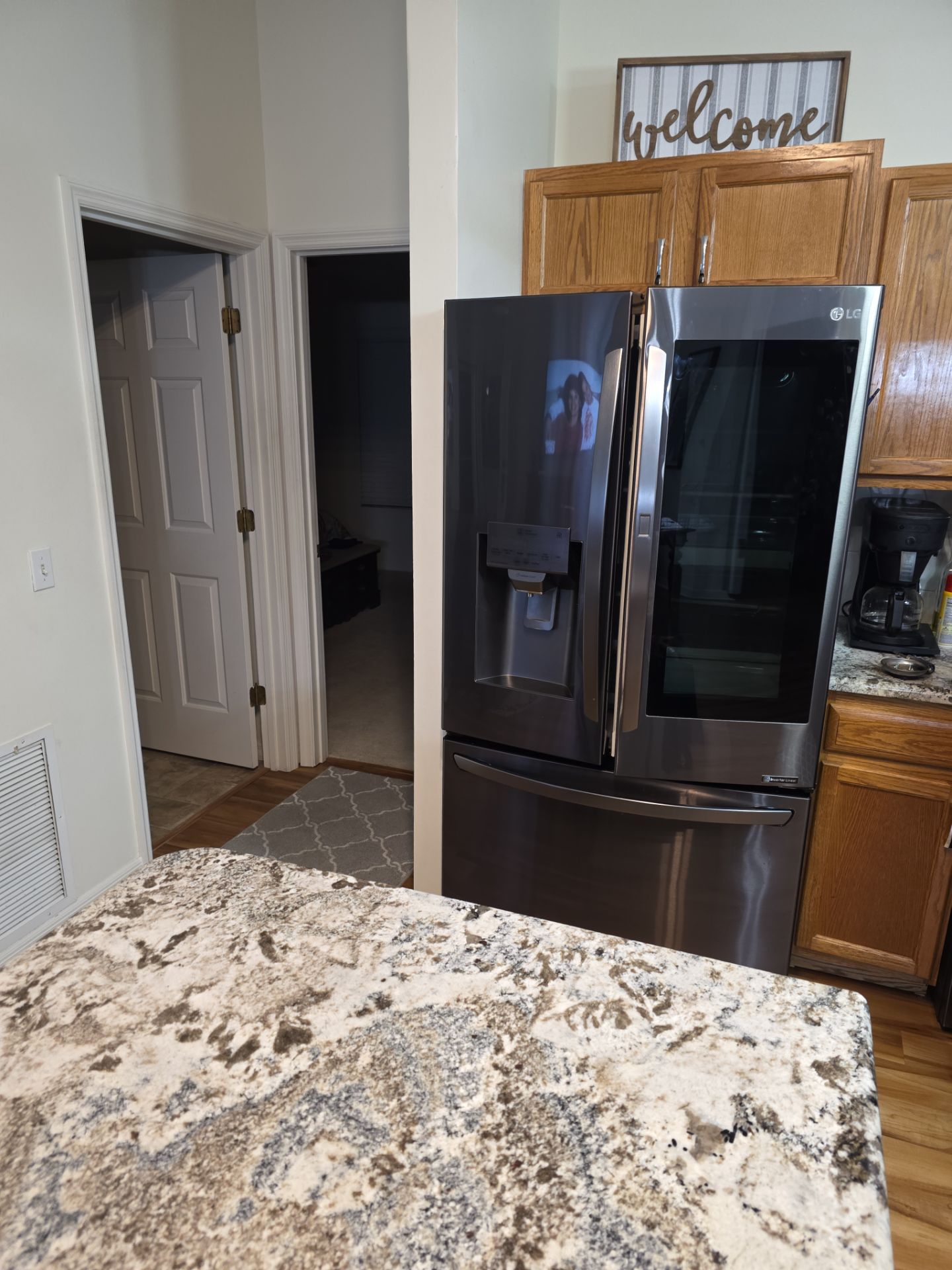
The frustrating truth? Many homeowners don’t understand what a compressor is or what failure really means. You might hear conflicting advice: "Just replace the compressor" or "You need a whole new fridge." The reality is more nuanced — and our technicians know exactly how to diagnose LG compressor problems and determine the best solution.
We’ve handled hundreds of LG refrigerators with compressor issues across Clermont, Orlando, Winter Park, Lake Mary, and beyond. Here’s what you need to know about LG compressor failure — and how to tell if repair or replacement is your best option.
Understanding Your LG Compressor: Why It Matters
Before we dive into failure signs, let’s clarify what you’re dealing with.
Your LG refrigerator’s compressor is a pump driven by an electric motor. It compresses refrigerant gas, raising its pressure and temperature. This high-pressure gas flows through condenser coils (usually on the back or underneath the fridge) where it releases heat and cools down into liquid form. That liquid then flows through expansion valves into evaporator coils inside your fresh food and freezer compartments, where it rapidly expands and evaporates — absorbing heat and creating the cold air that keeps your food fresh.
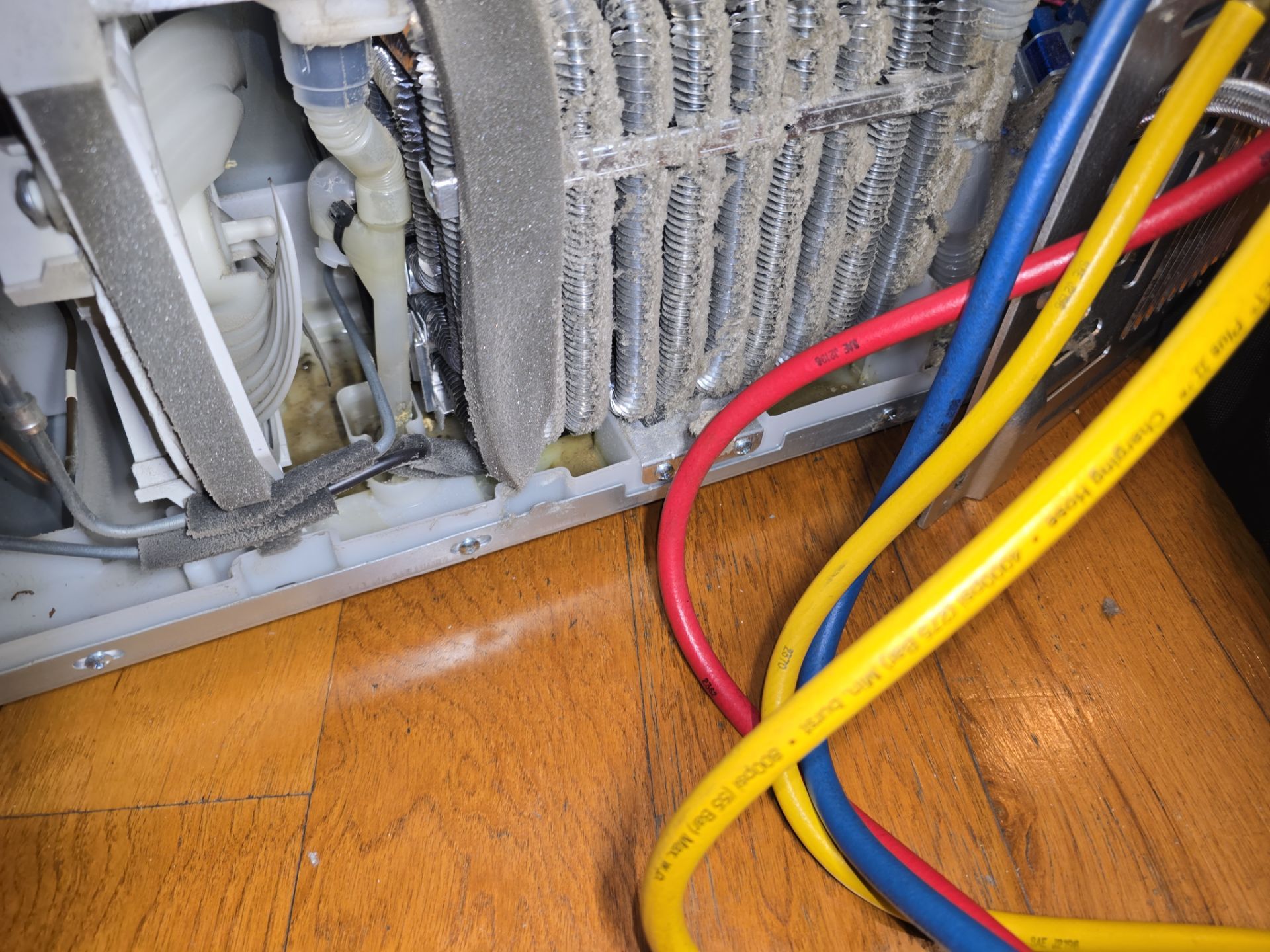
The entire cycle runs on a sealed system. The compressor is the only moving mechanical part in this closed loop. It runs thousands of hours per year, and when it wears out, the entire cooling system stops working.
5 Critical Signs of LG Compressor Failure
Sign #1: Unusual Noises (Clicking, Grinding, Hissing)
What You Might Notice:
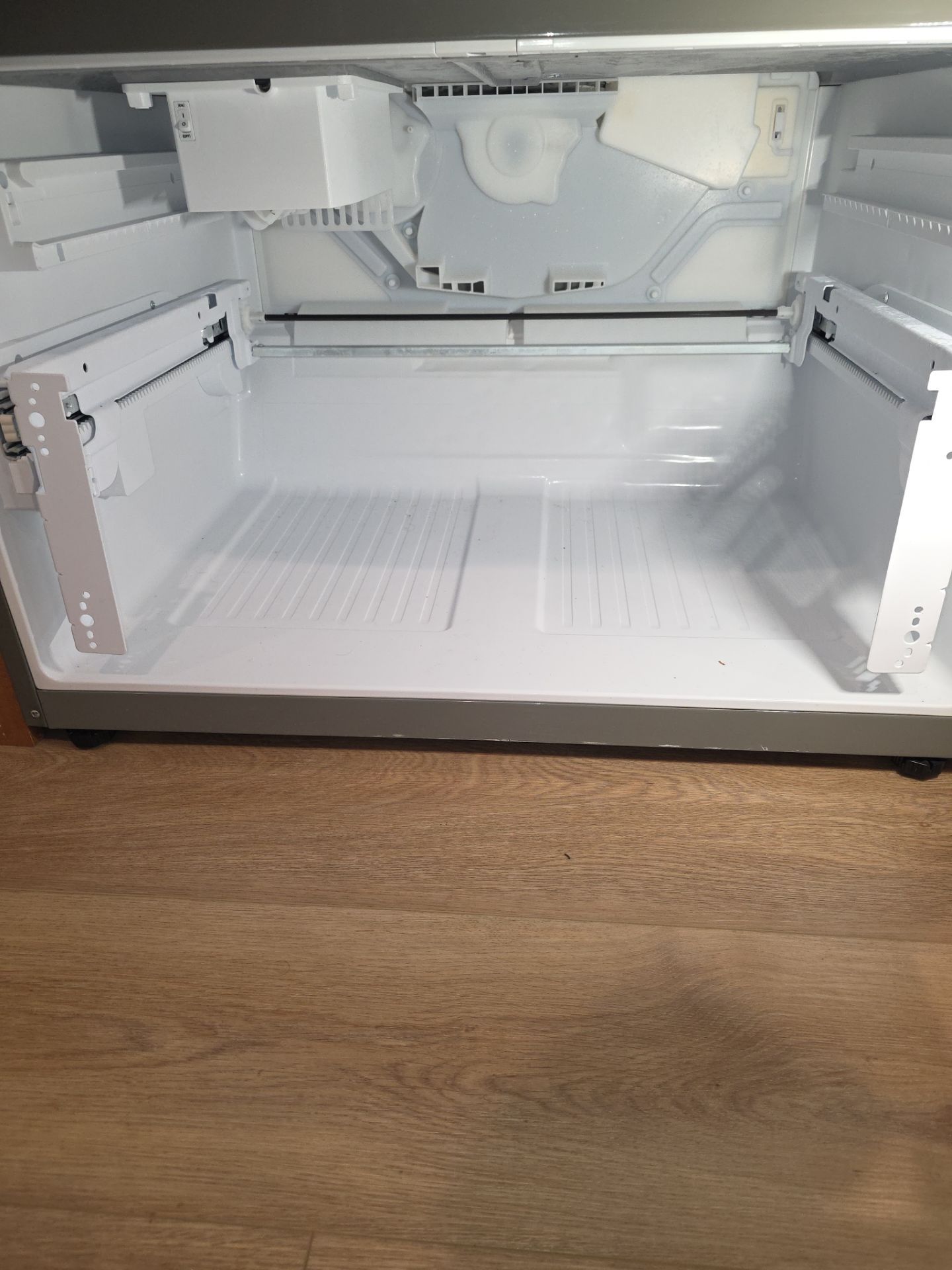
You hear a loud grinding, clicking, or rattling sound coming from underneath or behind the refrigerator when the compressor cycles on. The noise might last a few seconds or persist. You might also feel vibration in the cabinet itself. After a while, the noise becomes intermittent — sometimes the compressor runs quietly, sometimes it makes the grinding sound. You may also hear a hissing sound, which indicates refrigerant gas escaping through a damaged valve or connection.
What’s Happening:
These noises indicate internal mechanical breakdown inside the compressor:
- Grinding: Metal-on-metal contact inside the compressor housing, usually from bearing wear or broken internal components
- Clicking: Compressor is struggling to turn, often due to mechanical jam or internal pressure spike. The thermal overload protector may be cycling the compressor on and off
- Hissing: Refrigerant gas escaping from damaged valves or connections — a sign the sealed system has been compromised
- Rattling: Loose internal components or damaged compressor mounts
This is a critical warning sign that LG compressor failure is imminent. The noises you hear are the compressor literally tearing itself apart from the inside.
How We Fix It:
When a compressor makes these noises, replacement is almost always necessary. Our technician will confirm the compressor is the source of the sound (not a separate fan or pump), turn off the refrigerator immediately to prevent further internal damage, access the compressor, disconnect refrigerant lines and electrical connections, remove the old compressor, install a genuine LG replacement, perform full system evacuation and recharge per manufacturer specs, and test cooling for proper, quiet operation.
Sign #2: Compressor Won’t Start (Complete Silence)
What You Might Notice:
The compressor is completely silent. You don’t hear any cycling, humming, or motor sounds at all. The fridge and freezer gradually warm up over several hours. All food in the freezer eventually thaws. There’s no mechanical sound whatsoever — total silence.
What’s Happening:
Complete silence from the compressor means one of several things:
- The compressor motor has burned out — internal windings are damaged beyond repair
- The thermal overload protector has tripped and locked the compressor out due to overheating
- The start relay has failed — the component that helps the motor start can no longer deliver the initial power surge
- The control board has stopped sending power signals to the compressor
A "hard start kit" can sometimes temporarily get a weak compressor running again, but this is NOT a long-term solution. If the compressor needs a hard start kit to function, it’s already failing and replacement should be planned.
How We Fix It:
We diagnose by checking for power supply to the compressor using a multimeter, testing the start relay, checking continuity in the compressor motor windings, and testing the control board output. If power is present but the compressor won’t turn, the motor is burned out and requires replacement. If there’s no power reaching the compressor, the issue may be the control board or start relay — a much less expensive repair.
Sign #3: Refrigerant Leaks (Oil Staining, Frost Patterns)
What You Might Notice:
You notice dark, oily liquid pooling underneath the refrigerator or on the floor near the back. The area has a chemical smell. The refrigerant lines are wet or oily. You may see unusual frost patterns inside the freezer — uneven frost buildup or frost only in certain areas. Your fridge is cooling less and less, even though the compressor still runs.
What’s Happening:
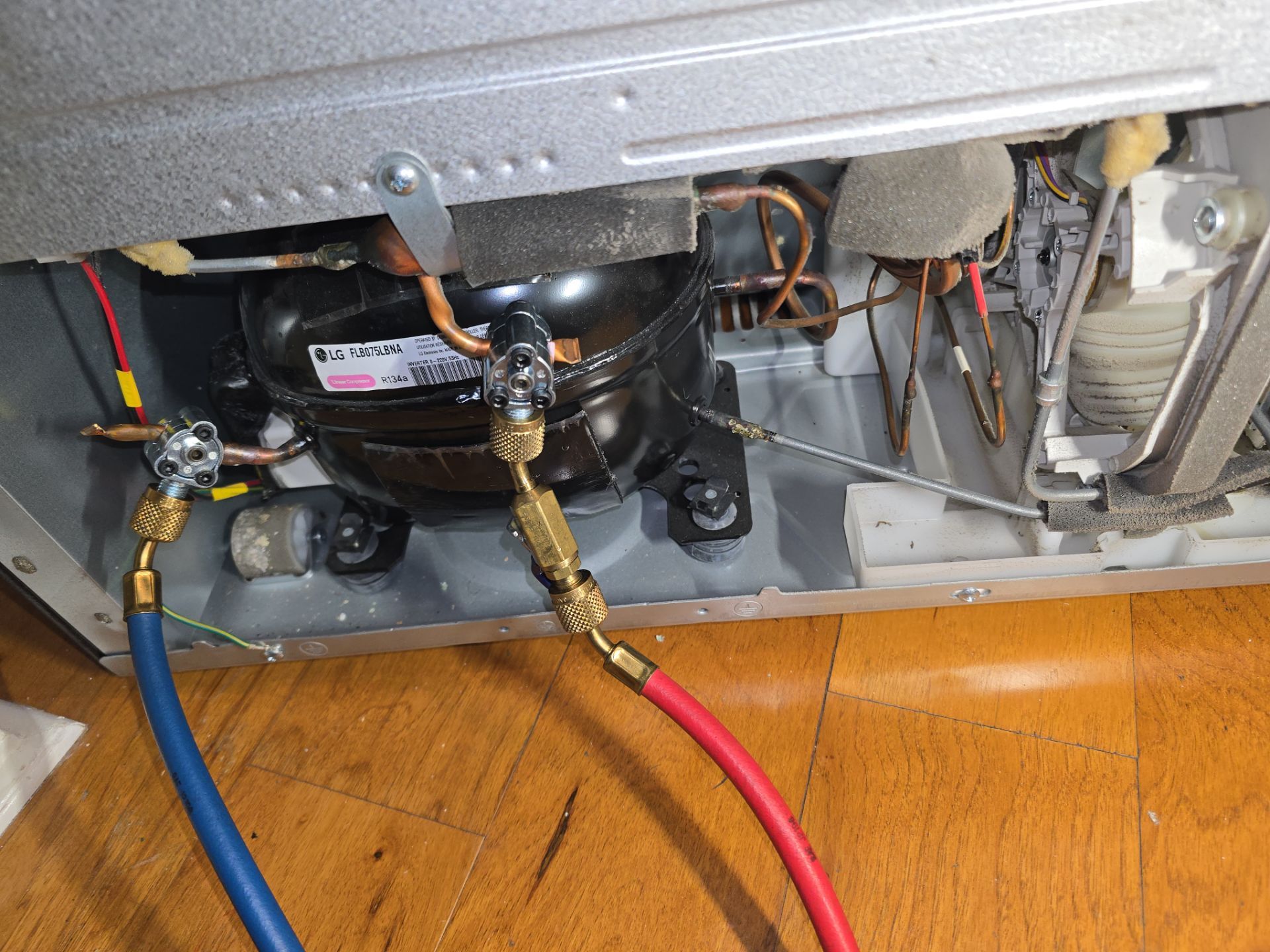
The compressor uses special mineral oil to lubricate its internal moving parts. When internal seals fail, this oil leaks out — and refrigerant escapes with it (they’re mixed together in the sealed system). Common leak locations include:
- Solder joints where refrigerant lines connect to the compressor
- Valve connections on the high and low pressure sides
- Internal compressor seals that have worn through
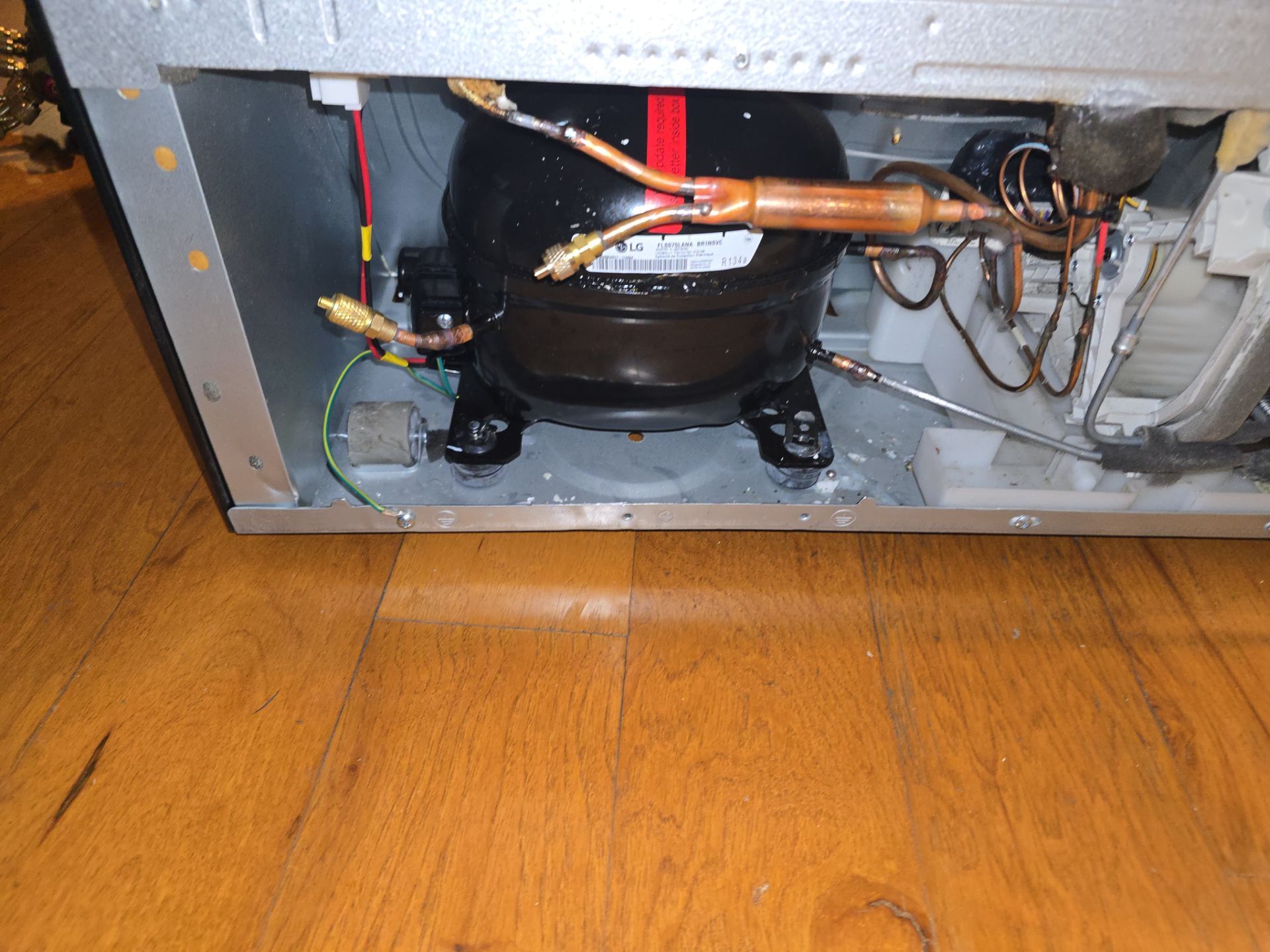
Without proper lubrication, compressor wear accelerates rapidly. Loss of oil also means loss of refrigerant, which directly reduces cooling capacity. An oil leak from the compressor is a serious red flag that LG compressor failure is in progress. Modern LG refrigerators use R600a refrigerant, which requires EPA-certified handling during any repair.
How We Fix It:
Oil leaks require immediate attention to prevent total compressor seizure. We locate the source of the oil leak, determine if it’s a repairable connection or internal seal failure, replace the compressor if internal seals are compromised, flush the entire system to remove oil residue, evacuate, recharge with the correct refrigerant, and test cooling before returning the unit to service.
Sign #4: Warm Fridge/Freezer Despite Running
What You Might Notice:
The compressor cycles on and off normally (you can hear it), but the fridge compartment stays warm. The freezer may still have some cold air, but it’s not maintaining proper temperature. You adjust the thermostat, but nothing changes. Food spoilage begins within 12-24 hours.
What’s Happening:
Early compressor failure often means the compressor is still mechanically turning, but it’s lost the ability to compress refrigerant effectively. This can happen when:
- Internal compressor components wear out (valves, piston rings)
- The compressor develops a slow leak where refrigerant escapes without external leak signs
- Lubrication inside the compressor breaks down, reducing compression efficiency
At this stage, your LG compressor failure is partial — it still runs, but it doesn’t work. The key diagnostic is checking the compressor discharge line temperature. If the line leaving the compressor isn’t hot (it should be very hot to the touch), the compressor isn’t compressing.
How We Fix It:
Our technician will use EPA-certified testing equipment to measure system pressures on both the high and low sides, compare readings to LG specifications for your specific model, perform a leak test if pressures are low, and check compressor amperage to see if it’s drawing normal electrical current. Depending on findings, we may repair a leak and recharge, or replace the compressor with a genuine LG part.
Sign #5: Constantly Tripping Breakers
What You Might Notice:
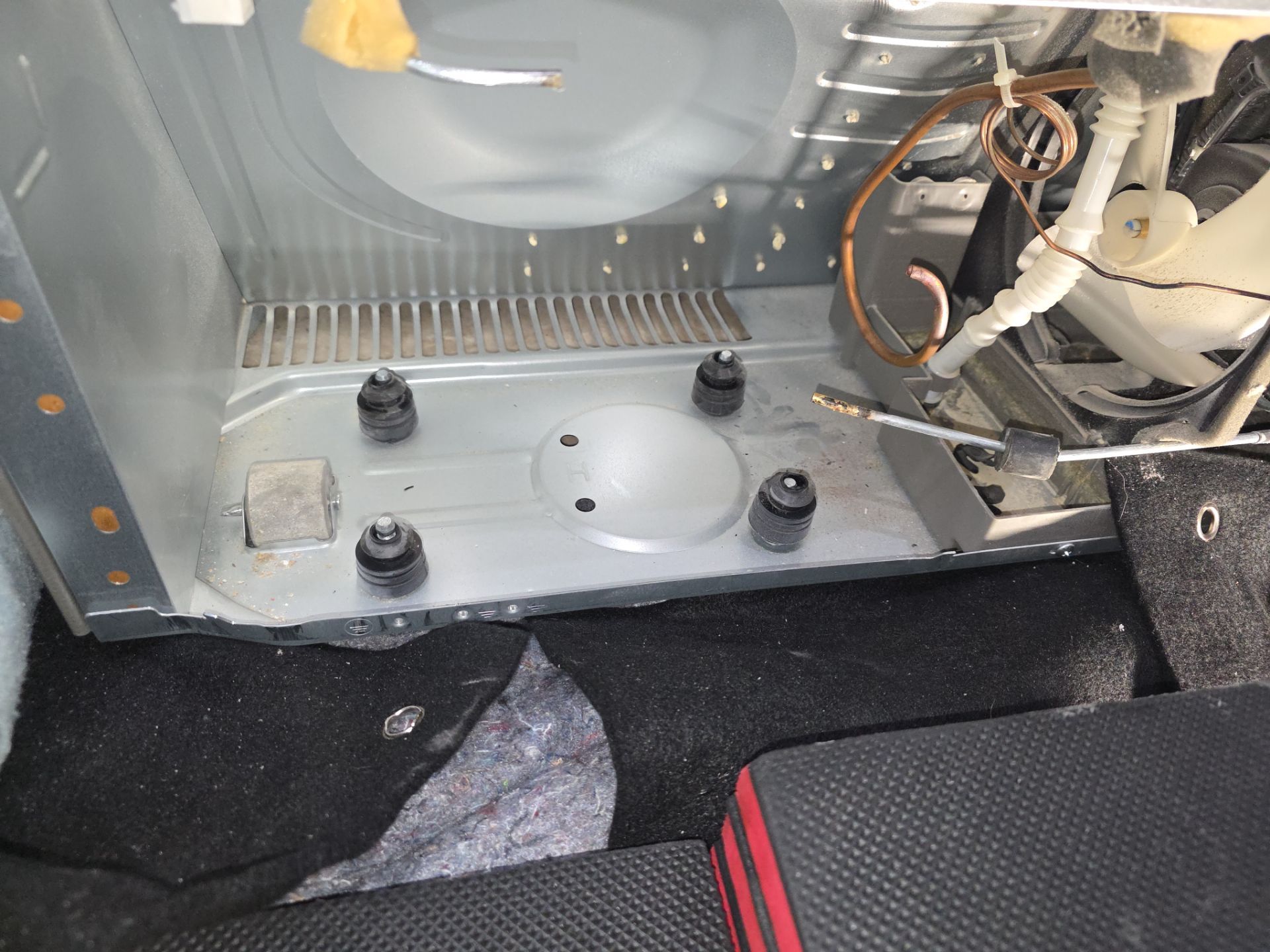
The circuit breaker for your kitchen or the outlet your refrigerator is plugged into keeps tripping. It happens every few hours, or sometimes multiple times per day. You reset the breaker and the fridge starts again, but it trips again within hours. The compressor area may feel unusually hot to the touch.
What’s Happening:
A failing compressor motor draws excessive electrical current as it struggles to operate. This excess current triggers your home’s circuit breaker as a safety measure. The compressor motor windings may be partially shorted, creating a dangerous electrical condition. This is both a compressor failure sign and an electrical safety hazard.
The problem always gets worse over time — never better. Each time the compressor overheats and trips the breaker, it causes more internal damage. The cycle accelerates until the motor burns out completely.
How We Fix It:
We run a complete electrical diagnostic measuring compressor amp draw with a clamp meter, testing motor winding resistance for shorts, checking the start relay and overload protector, and verifying your home’s electrical supply is adequate. If the compressor is drawing excessive current, replacement is necessary. We always verify the electrical circuit is safe before and after compressor replacement.
Repair vs. Replace: The Cost Decision Matrix
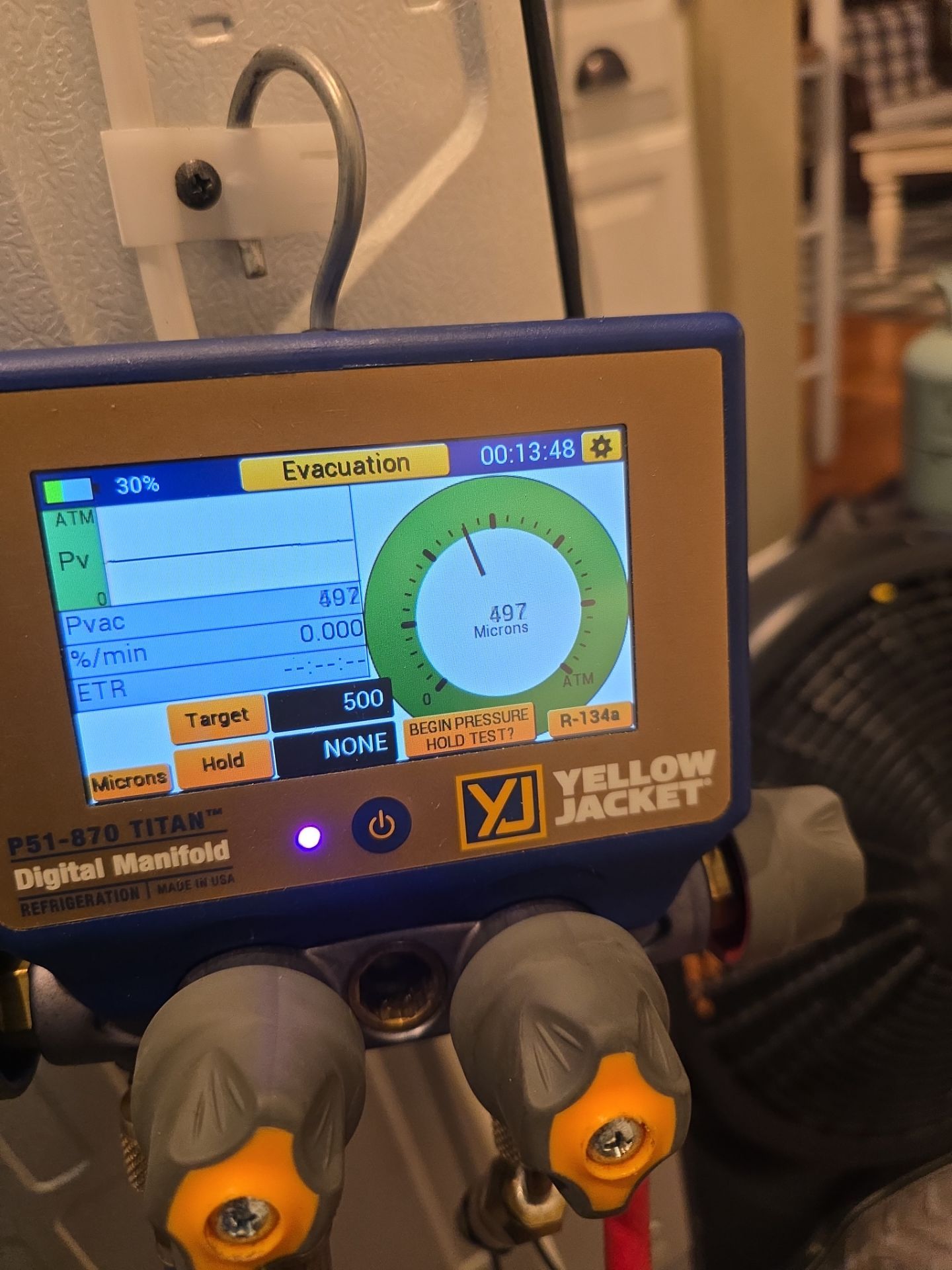
This is the question homeowners ask us constantly: "Is it worth fixing the compressor, or should I just buy a new refrigerator?"
| Scenario | Fridge Age | Repair Cost | Replace Cost | Recommendation |
|---|---|---|---|---|
| Early failure | Under 5 years | $400-$700 | $1,200-$2,000 | Repair ✔ |
| Mid-life failure | 5-10 years | $500-$800 | $1,200-$2,000 | Evaluate both |
| Late-life failure | 10+ years | $600-$900 | $1,200-$2,000 | Usually replace |
Compressor replacement makes sense when:
- Your LG refrigerator is less than 8-10 years old
- The rest of the appliance is in good condition (no rust, leaks, or other major issues)
- Repair cost is less than 40-50% of a new fridge’s purchase price
- You want to keep your current model (brand loyalty, space fit, feature set)
New refrigerator makes more sense when:
- Your LG is 10+ years old and already showing other wear
- Compressor replacement cost exceeds 50% of a new fridge
- The unit has a history of other repairs
- You want updated features (smart connectivity, better efficiency, warranty coverage)
Why LG Compressor Failures Happen: Common Causes
Age & Wear: LG compressors typically last 8-12 years with proper maintenance. After that, internal wear accelerates and failure becomes increasingly likely.
Overworked Compressor: Running in hot environments (Florida garages, kitchens with poor ventilation), extremely low thermostat settings, or with condenser coils clogged with dust forces the compressor to work harder and longer. Central Florida’s heat and humidity put extra stress on every compressor.
Refrigerant Leaks (Undetected): A slow leak means the compressor works overtime trying to maintain system pressure. Eventually, it wears out from the constant strain.
Power Surges or Electrical Issues: Florida thunderstorms cause frequent power surges that can damage the compressor motor. A quality surge protector on your refrigerator outlet can help prevent this.
Poor Maintenance: Dirty condenser coils force the compressor to run continuously. Never-serviced systems are far more prone to early failure.
Prevention: How to Extend Your LG Compressor’s Life
- Clean Condenser Coils Annually — Dust buildup makes the compressor work harder. Clean coils behind or underneath the fridge with a vacuum and soft brush at least once a year.
- Ensure Proper Ventilation — Leave 2-3 inches of space behind and on the sides of the refrigerator for air circulation. Don’t push it flush against the wall.
- Keep Consistent Temperature Settings — Don’t set your fridge colder than necessary. 35-38°F for fresh food, 0°F for freezer is ideal.
- Don’t Overload — Overcrowding blocks air circulation inside the fridge, forcing the compressor to work harder to maintain temperature.
- Use Surge Protection — Especially in Central Florida where thunderstorms are frequent. A good surge protector can save your compressor from electrical damage.
- Schedule Professional Maintenance — Annual inspection from a certified technician can catch early signs of compressor wear before catastrophic failure.
When to Call a Professional
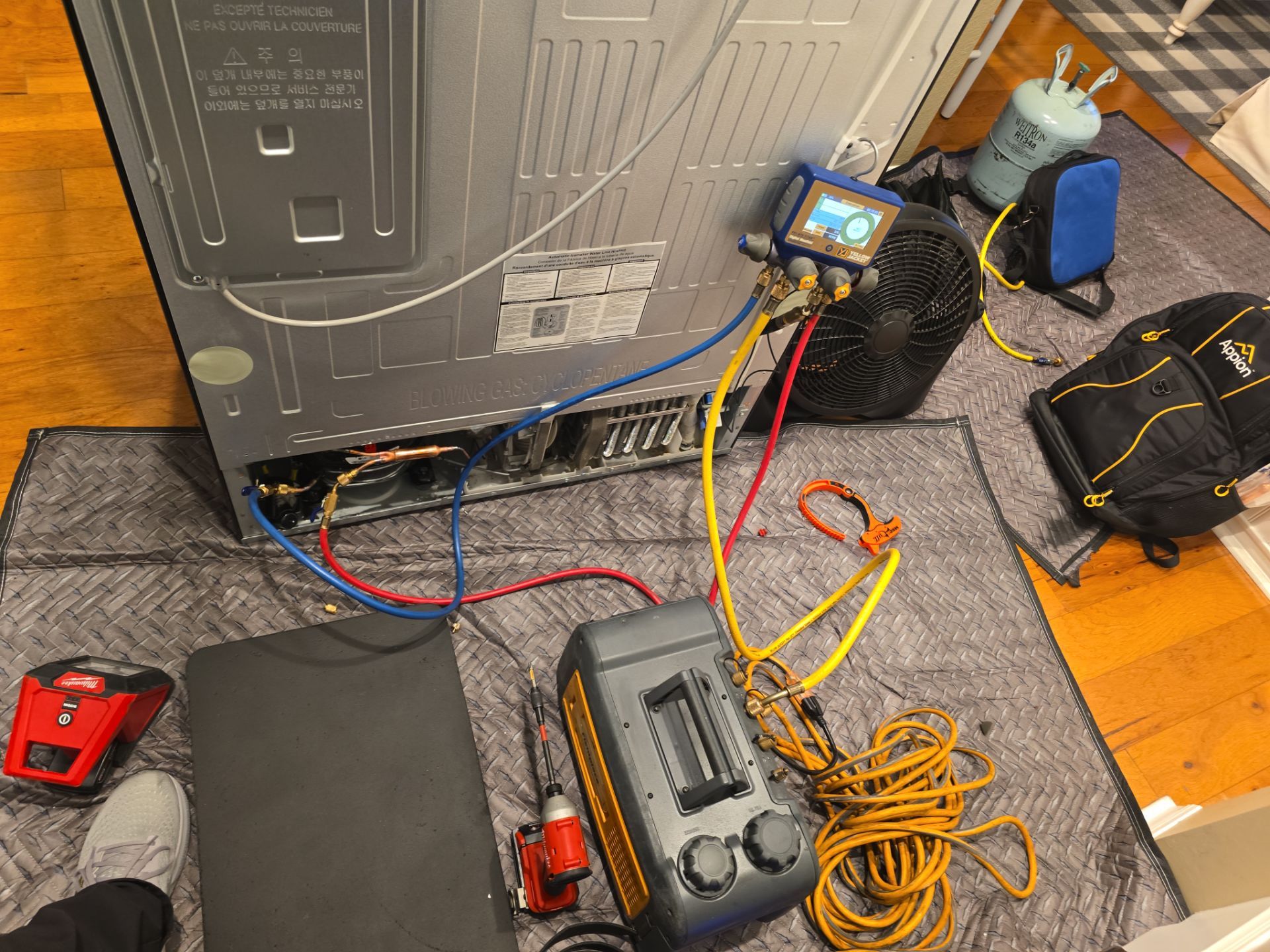
Compressor repair is not a DIY project. Here’s why:
- Refrigerant handling requires EPA certification — It’s illegal to release refrigerant into the atmosphere. Proper evacuation equipment is required.
- High voltage danger — Compressor circuits carry dangerous voltage. Improper electrical work can cause injury or fire.
- Specialized tools — Manifold gauge sets, vacuum pumps, refrigerant scales, and brazing equipment are needed for proper compressor replacement.
- System contamination risk — Improper installation can introduce moisture or contaminants that destroy the new compressor within months.
- Warranty preservation — DIY repairs void manufacturer warranties. Professional installation preserves your coverage.
Service Area
We repair LG refrigerators and diagnose compressor failures across Central Florida, including:
- Clermont · Minneola · Groveland · Montverde
- Orlando · Winter Park · Maitland · Lake Nona
- Winter Garden · Gotha
- Lake Mary · Winter Springs · Oviedo
- Leesburg · Tavares · Mount Dora · Eustis
- The Villages · Lady Lake · Fruitland Park
- Wildwood · Ocala
- Ferndale · Astatula · Grand Island · Mascotte
- Howey-in-the-Hills · Okahumpka · Reunion · Four Corners
Hearing compressor noises or concerned about failure? Call (352) 757-0949 or text (352) 757-0949 for immediate diagnostic service. We’ll tell you exactly what’s happening with your compressor and your repair options.
Learn more about LG appliance repair on our brand page, or explore our refrigerator repair services. You may also find our Samsung refrigerator troubleshooting guide and Samsung ice maker repair guide helpful for comparison.