
Your Baker’s Pride convection oven is the backbone of your commercial kitchen — until it stops heating. Whether you’re running a Cyclone BCO series, a GDCO double-deck, or a BPCV bakery-depth model, a convection oven that won’t reach temperature means food stops going out and revenue stops coming in.
Baker’s Pride has built a reputation for reliable, heavy-duty commercial ovens that deliver consistent results in restaurants, bakeries, and pizzerias across Central Florida. But like any piece of commercial kitchen equipment that runs for hours every day, components wear out over time.
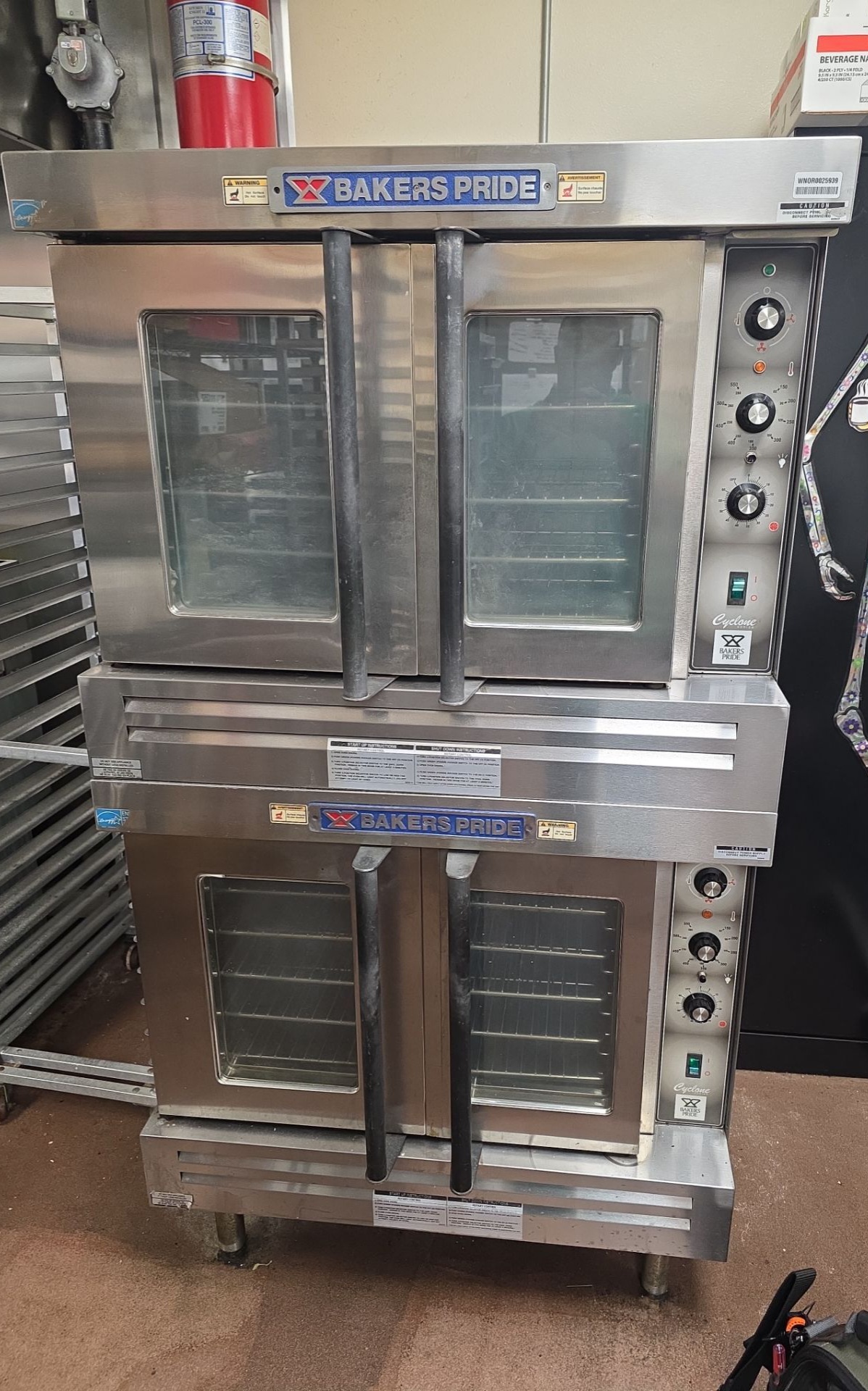
In this guide, our certified commercial appliance technicians break down the 5 most common causes of a Baker’s Pride convection oven not heating — and what it takes to fix each one. Some of these you can check yourself. Others require a trained professional with the right tools and replacement parts.
⚠️ Important Safety Note: Before performing any troubleshooting on a gas convection oven, always shut off the gas supply. For electric models, disconnect power at the breaker. Commercial ovens operate at high temperatures and voltages — when in doubt, call a professional.
1. Faulty Hot Surface Ignitor (Gas Models)
If your Baker’s Pride gas convection oven clicks on but never actually ignites, the hot surface ignitor is the first component to suspect. This is the single most common failure point on Baker’s Pride Cyclone BCO-G1, BCO-G2, GDCO-G1, and GDCO-G2 gas convection ovens.
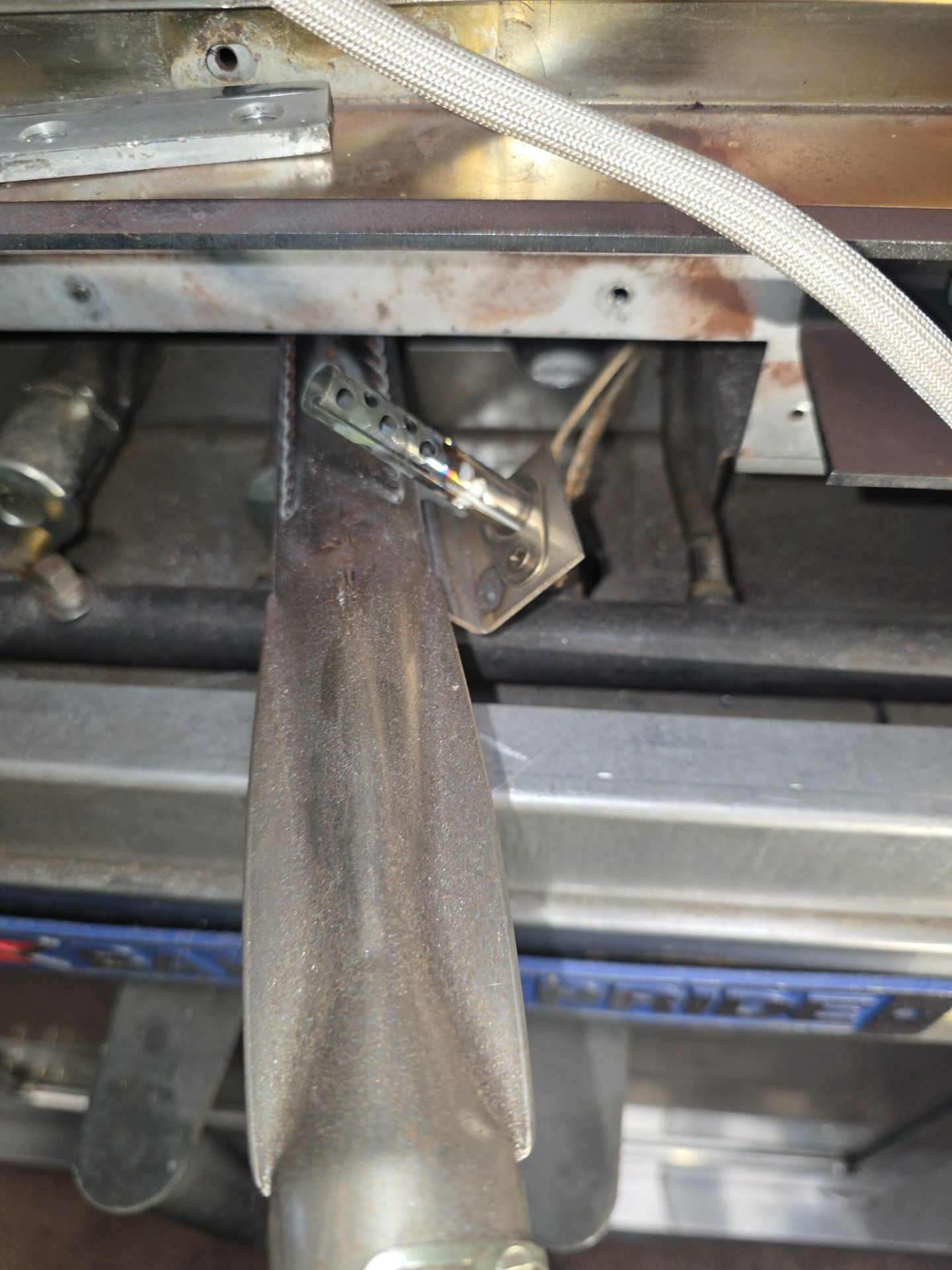
What happens: You turn the oven on and hear the fan start running, but the burner never lights. The oven may go through its preheat cycle on the display, but the interior stays cold. In some cases, the ignitor glows dimly but never gets hot enough to open the gas valve.
Why it fails: The hot surface ignitor in Baker’s Pride gas convection ovens operates at 24 volts. Over time, the silicon carbide element inside the ignitor degrades from repeated heating and cooling cycles. When the ignitor can no longer draw enough amperage (typically 3.0–3.6 amps), it won’t generate sufficient heat to open the gas safety valve — even if it still glows orange.
How to diagnose: A technician will use an ammeter to measure the current draw through the ignitor circuit. If it reads below the minimum amperage threshold for the gas valve (usually around 3.0 amps), the ignitor needs replacement regardless of whether it still glows. Visual inspection alone is unreliable — an ignitor can glow and still be too weak.
The fix: Replace the 24V hot surface ignitor (Baker’s Pride part #2065874 or equivalent). This is one of the more straightforward commercial oven repairs, but it requires disconnecting gas and electrical connections safely. A trained technician can typically complete this repair in under an hour.
💡 Pro tip: If your Baker’s Pride oven lights initially during preheat but fails to re-ignite after the first temperature cycle, the ignitor is likely borderline — strong enough to light once when cold, but too weak after thermal cycling.
2. Defective Thermostat or Temperature Control
When your Baker’s Pride convection oven heats but never reaches the set temperature — or overshoots and burns everything — the thermostat or electronic temperature control is usually to blame.
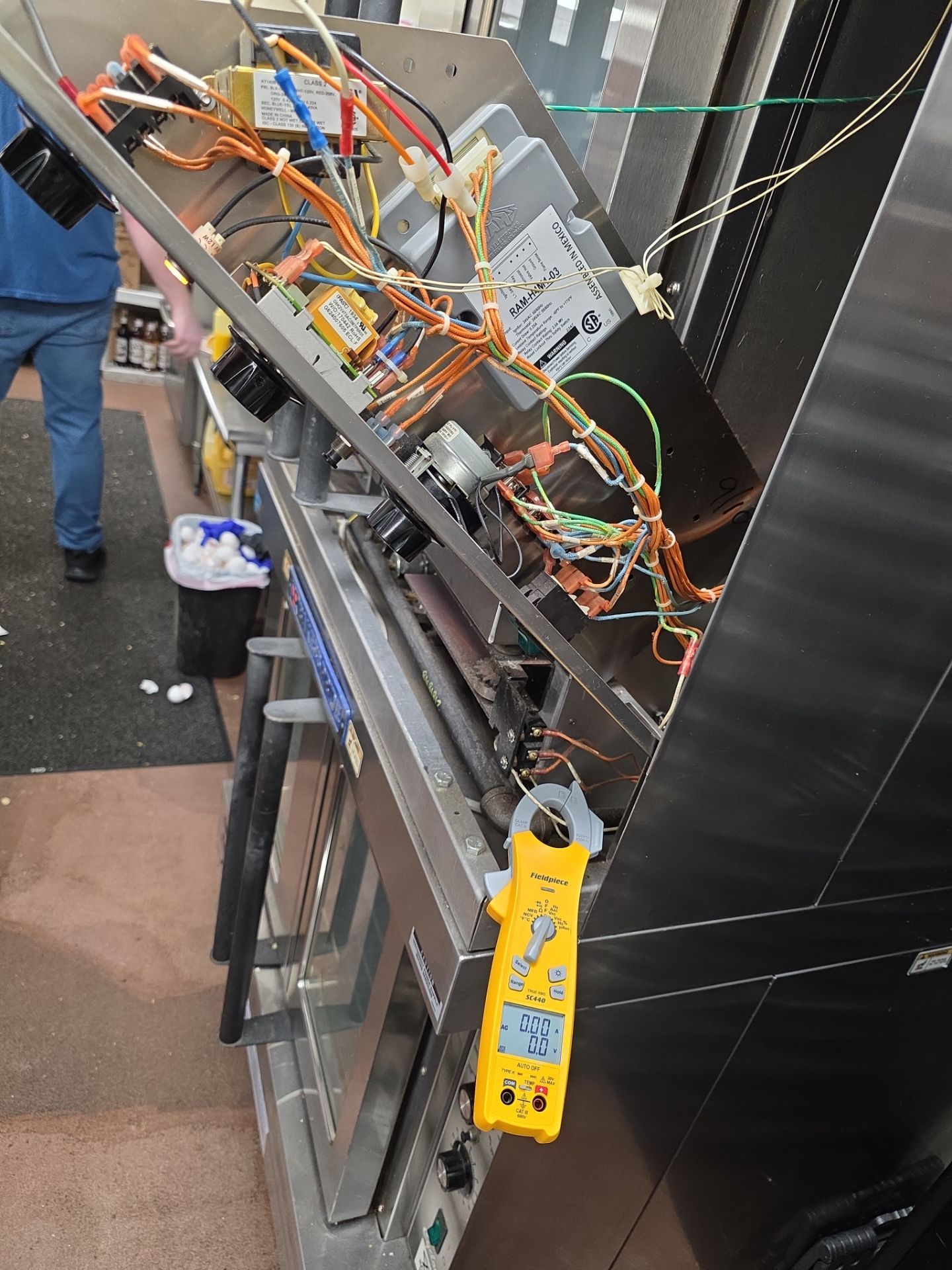
What happens: The oven may heat to 300°F but plateau there even when set to 450°F. Or it may cycle erratically, swinging 50–75 degrees above and below the target temperature. In the worst case, the thermostat fails completely and the oven produces no heat at all.
Why it fails: Baker’s Pride Cyclone series ovens (BCO, GDCO) use rotary control thermostats with a capillary bulb that senses temperature inside the oven cavity. The capillary tube is filled with a heat-sensitive liquid that expands to regulate the gas valve or electrical contactor. Over time, this tube can develop micro-leaks, kinks from rack loading, or the calibration drifts beyond the adjustable range. Newer BPCV series models use electronic temperature controls that can fail from power surges or moisture damage.
How to diagnose: Place a calibrated digital thermometer next to the thermostat’s capillary bulb inside the oven. Set the oven to 400°F and let it heat until the burner cycles off. If the thermometer reads more than 25°F above or below the set point, the thermostat needs calibration or replacement.
Calibration adjustment (BCO/GDCO models): Pull the temperature knob straight off. Behind it, you’ll see a round calibration disc held by two Phillips screws. Hold the disc steady, loosen the screws, and turn the plate clockwise to increase the set point or counter-clockwise to decrease it. Tighten the screws and retest. Note: breaking the seal on calibration screws may void your thermostat warranty.
When to replace: If calibration adjustment can’t bring the temperature within 10–15°F of the set point, or if the capillary tube is kinked or damaged, the entire thermostat assembly needs replacement. This is a repair that should be handled by a certified commercial appliance technician.
3. Door Interlock Switch Failure
This one tricks a lot of people. Your Baker’s Pride convection oven appears completely dead — no fan, no heat, nothing — but the problem isn’t electrical supply. It’s a small safety switch you may not even know exists.
What happens: When you close the oven door and turn it on, absolutely nothing happens. The convection fan doesn’t spin, the ignitor doesn’t glow, and there’s no sign of life from the oven despite having power. Alternatively, the oven works fine with one door but not the other on double-door models.
Why it fails: Every Baker’s Pride convection oven has a door interlock switch (also called a door safety switch) that cuts power to the heating system and convection fan when the door is open. This is a critical safety feature that prevents burns and gas buildup. The interlock switch is a mechanical microswitch that gets actuated thousands of times a day in a busy kitchen. Over time, the switch contacts wear out, the actuator arm bends, or the switch body cracks from heat exposure.
How to diagnose: Open and close the oven door slowly while listening for the click of the interlock switch engaging. If you don’t hear a distinct click, the switch may not be making contact. A technician can test the switch with a multimeter for continuity — it should show continuity when the door is closed and the switch is depressed.
The fix: Replace the door interlock switch. On Baker’s Pride Cyclone models, the switch is typically located near the top of the door frame. It’s an inexpensive part, but accessing it requires removing interior panels, and the oven must be fully cooled and powered down. A professional can replace this in about 30–45 minutes.
💡 Pro tip: If your oven works intermittently — sometimes heating, sometimes not — the door switch may be failing inconsistently. Try pressing firmly on the closed door while the oven is on. If the oven suddenly springs to life, the interlock switch is your culprit.
4. Convection Fan Motor Failure
The convection fan is what makes a convection oven a convection oven. Without it, you’ve got uneven heating, hot spots, and food that’s burned on one side and raw on the other. When the fan motor dies completely, the oven may not heat at all — many Baker’s Pride models won’t fire the burner unless the fan is running.
What happens: The oven may heat but cook unevenly, with food browning on one side and staying pale on the other. Or the fan runs on one speed but not the other (Baker’s Pride Cyclone models feature a two-speed fan motor). In complete fan failure, the oven may refuse to ignite because the control system detects no airflow.
Why it fails: Baker’s Pride Cyclone BCO series ovens use a 1/4 HP two-speed fan motor, while BPCV bakery-depth models use a more powerful 1/2 HP motor. These motors run for 10–16 hours per day in a hot, grease-laden environment. Bearings wear out from constant rotation, windings degrade from heat exposure, and the motor capacitor (which provides the starting boost) weakens over time.
How to diagnose: With the oven off and cool, try spinning the fan blade by hand through the interior. It should spin freely with minimal resistance. If it’s stiff, grinding, or seized, the motor bearings are shot. If the blade spins freely but the motor won’t run electrically, the motor windings or start capacitor have likely failed. A technician can measure winding resistance and capacitor microfarads to confirm.
The fix: Depending on the diagnosis, the repair may be as simple as replacing the motor capacitor or may require a full fan motor replacement. Motor replacement on Baker’s Pride convection ovens involves removing the rear panel, disconnecting wiring, and carefully extracting the motor from the fan housing. This is a 1–2 hour repair for an experienced commercial appliance technician.
💡 Pro tip: If your fan makes a loud humming or buzzing noise but doesn’t spin, the start capacitor is the likely culprit — not the motor itself. This is a much cheaper fix. Don’t let someone talk you into a full motor replacement without testing the capacitor first.
5. Gas Valve or Safety Valve Malfunction
If your Baker’s Pride convection oven’s ignitor glows bright and hot but the burner still doesn’t light, the gas valve or safety valve may be stuck closed. This is the most serious — and potentially dangerous — failure on the list.
What happens: The ignitor glows bright orange (indicating it’s drawing proper amperage), but gas never flows to the burner. The oven goes through repeated ignition attempts without ever lighting. You may hear clicking from the valve without gas flow.
Why it fails: Baker’s Pride gas convection ovens use a combination gas valve and safety valve assembly. The safety valve contains a bimetallic element that responds to the heat from the ignitor — when the ignitor reaches the proper temperature, the bimetallic strip opens the valve to allow gas flow. Over time, this bimetallic element can lose its sensitivity, the valve seat can become fouled with debris, or the solenoid coil can burn out from electrical surges.
On older Baker’s Pride models with standing pilot lights, the thermopile or thermocouple generates a small electrical voltage from the pilot flame heat to hold the safety valve open. A failing thermopile produces insufficient voltage (should be 300+ millivolts under load), causing the safety valve to close and shut off all gas flow.
How to diagnose: This requires a trained technician with a multimeter. They’ll verify the ignitor amperage is within spec, then test voltage at the gas valve coil terminals. If voltage is present and within range but the valve doesn’t open, the valve assembly needs replacement. If no voltage is reaching the valve, the problem is upstream — potentially the thermostat, high-limit switch, or wiring.
The fix: Replace the gas valve/safety valve assembly. This is strictly a professional repair — it involves working with gas connections and requires leak testing with a combustible gas detector after installation. A certified technician will also verify proper gas pressure (typically 3.5″ WC for natural gas, 10″ WC for propane) after the repair.
⚠️ Warning: Never attempt to bypass or manually open a stuck gas valve. This creates an extreme fire and explosion hazard. If you suspect a gas valve problem, shut off the gas supply immediately and call a professional.
Preventive Maintenance: Keep Your Baker’s Pride Running Strong
Most Baker’s Pride convection oven failures are preventable with regular maintenance. Here’s what we recommend for commercial kitchens in Central Florida:
Daily
- Wipe down the oven interior after the last use of the day
- Check that door gaskets seal fully when closed
- Verify the convection fan is running smoothly at both speeds
Weekly
- Clean the oven interior thoroughly with an approved commercial oven cleaner
- Inspect the door gaskets for tears, hardening, or gaps
- Check the air intake and exhaust vents for grease buildup
Monthly
- Remove and clean oven racks and rack guides
- Inspect the ignitor for visible cracks or discoloration (gas models)
- Verify thermostat accuracy with a calibrated thermometer
- Clean the convection fan blades and housing
Annually
- Schedule a professional inspection and tune-up
- Have gas connections tested for leaks
- Replace door gaskets if they’re hardened or no longer sealing
- Test safety systems including the door interlock and high-limit switches
Baker’s Pride Models We Service
At AMB Works, our certified commercial appliance technicians service the full range of Baker’s Pride convection ovens, including:
- Cyclone BCO Series (BCO-G1, BCO-G2, BCO-E1, BCO-E2) — Full-size single and double-deck models
- GDCO Series (GDCO-G1, GDCO-G2, GDCO-E1, GDCO-E2) — Full-size with synchronized doors
- BPCV Series (BPCV-G1, BPCV-G2, BPCV-E1, BPCV-E2) — Bakery-depth for high-volume baking
- CO11 Series — Legacy models still found in many Central Florida kitchens
Whether your oven runs on natural gas, propane, or electricity, we carry common Baker’s Pride replacement parts on our trucks for same-day commercial oven repair across Central Florida.
When to Call a Professional
While some basic checks (verifying power, inspecting door seals, checking for tripped breakers) can be done by kitchen staff, most Baker’s Pride convection oven repairs require a certified commercial appliance technician. Here’s why:
- Gas safety: Working with gas connections requires proper training, tools, and leak detection equipment
- Electrical hazards: Commercial ovens operate on 208V–240V three-phase power that can be lethal
- Warranty protection: DIY repairs on Baker’s Pride ovens void the manufacturer’s warranty (1 year on BCO models, 2 years on GDCO/BPCV models)
- Code compliance: Commercial kitchen equipment repairs must meet local fire codes and health department requirements
Trust AMB Works for Baker’s Pride Convection Oven Repair in Central Florida
When your Baker’s Pride convection oven goes down, every minute counts. AMB Works provides same-day commercial appliance repair across Central Florida — from Orlando and Winter Park to Clermont, Leesburg, and The Villages.
Our technicians are experienced with all Baker’s Pride convection oven models and carry common replacement parts including ignitors, thermostats, door switches, fan motors, and gas valve assemblies. We understand that a broken oven means lost revenue, and we work fast to get your kitchen back up and running.
📞 Call (352) 757-0949 for same-day Baker’s Pride convection oven repair, or text (352) 757-0949 to schedule service.
Baker’s Pride Repair Coverage in Clermont and Central Florida
Need Baker’s Pride oven service for a restaurant, bakery, or pizzeria? AMB Works’ commercial appliance repair team provides diagnosis and repair for commercial cooking equipment in Clermont and throughout Central Florida. Review our brands we service directory for additional equipment coverage, and include the oven model, serial number, fuel type, and symptoms when you request service.
Our service area also includes Orlando and nearby communities. If the oven has a gas odor, exposed wiring, or a failed safety control, shut it down and leave the repair to a qualified technician.
Frequently Asked Questions
How do I know if my Baker’s Pride convection oven needs professional repair?
If your Baker’s Pride oven won’t heat, heats unevenly, or the convection fan isn’t running, it’s time to call a professional. While basic checks like verifying power and inspecting door seals can be done by kitchen staff, any repair involving gas connections, electrical components, or internal parts should be handled by a certified commercial appliance technician. AMB Works provides upfront diagnosis so you know exactly what’s needed before any work begins.
Why does my Baker’s Pride oven heat unevenly?
Uneven heating in a Baker’s Pride convection oven typically points to a failing convection fan motor (running slowly or only on one speed), a mispositioned thermostat capillary bulb, or blocked air circulation from overloading racks. Our technicians can diagnose the exact cause during a service call.
How often should a commercial convection oven be serviced?
We recommend professional maintenance at least once per year for commercial convection ovens, or every six months for high-volume kitchens running the oven 12+ hours per day. Regular maintenance catches worn ignitors, degraded door gaskets, and thermostat drift before they cause a breakdown during service.
Can I use my Baker’s Pride convection oven if the fan isn’t working?
We strongly advise against it. Without the convection fan, heat distribution is severely uneven, which means inconsistent cooking results and potential food safety issues. Many Baker’s Pride models also include safety interlocks that prevent the burner from firing if the fan isn’t running. Call for service immediately.
What’s the lifespan of a Baker’s Pride convection oven?
With proper maintenance, a Baker’s Pride commercial convection oven typically lasts 15–20 years. The Cyclone BCO and GDCO series are built with heavy-gauge steel construction and porcelain-enamel interiors designed for decades of commercial use. Regular part replacements (ignitors every 2–3 years, door gaskets every 3–5 years) keep them running efficiently.
Do you carry Baker’s Pride replacement parts?
Yes. AMB Works stocks common Baker’s Pride convection oven parts on our service trucks, including hot surface ignitors, thermostats, door interlock switches, fan motor capacitors, and door gaskets. For less common parts, we can typically source and install them within 1–2 business days.