
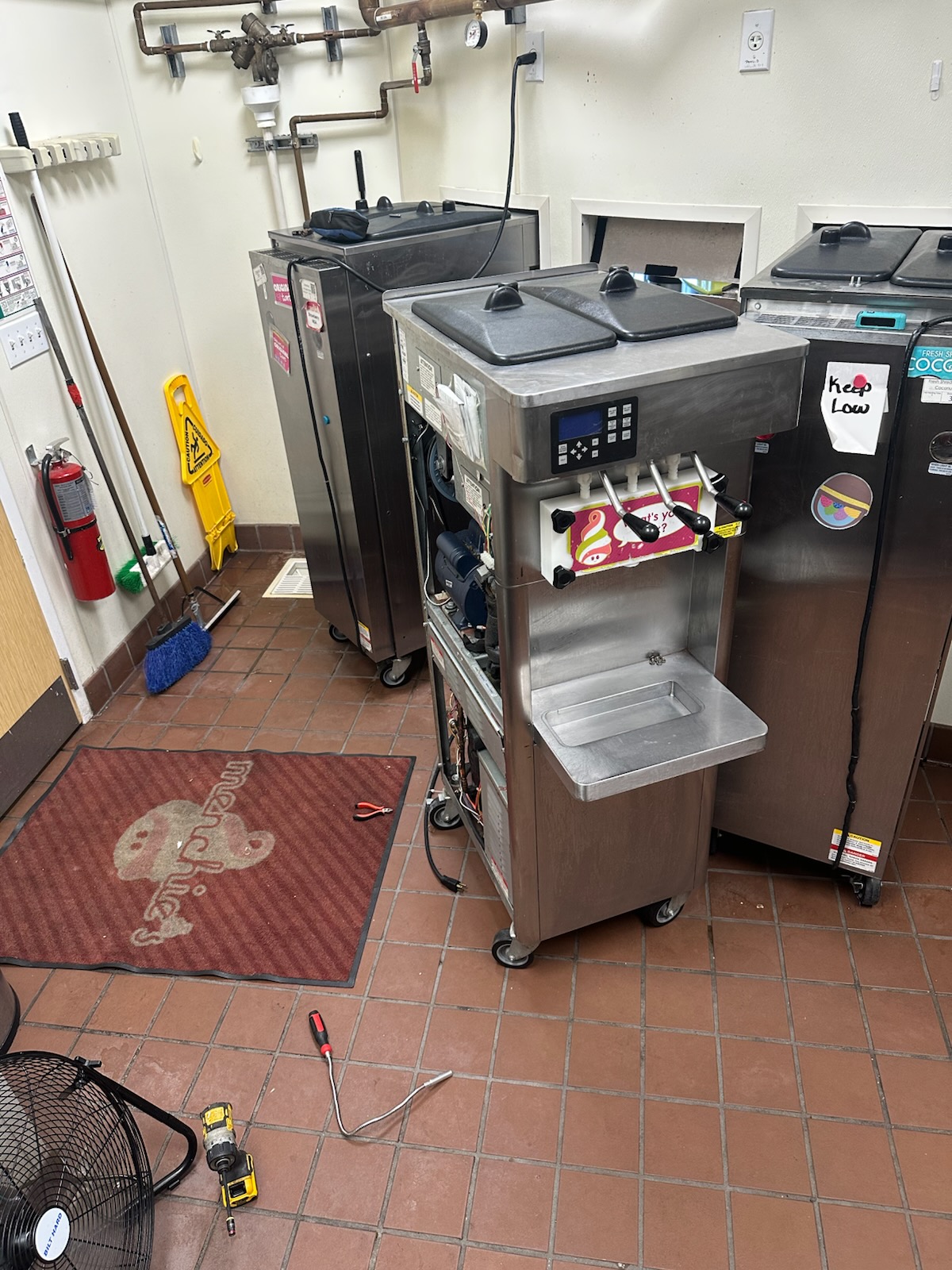
When your Stoelting frozen yogurt machine starts dispensing product that’s too runny, too icy, or just doesn’t taste right, you’ve got a consistency problem — and it’s costing you money. Customers can tell the difference between perfectly smooth frozen yogurt and a subpar product, and they won’t come back for the latter.
Stoelting has been a trusted name in soft serve and frozen yogurt equipment for decades, and their machines are engineered for reliable, high-volume output. But like any commercial equipment running 12+ hours a day, components wear down and calibrations drift. The good news? Most consistency issues have identifiable causes and proven solutions.
At AMB Works, we service Stoelting frozen yogurt and soft serve machines across Central Florida — from single-flavor countertop units to high-capacity floor models. We’ve diagnosed every type of consistency problem these machines can throw at you.
Here are the five most common causes of Stoelting frozen yogurt consistency issues and what needs to happen to fix them.
1. Incorrect Mix Ratio or Overrun Settings
The most frequent cause of consistency problems isn’t a mechanical failure at all — it’s the mix itself or how much air the machine is incorporating into the product.
What’s Happening
Overrun refers to the amount of air whipped into the frozen yogurt during the freezing process. Too much air and the product comes out fluffy, foamy, and melts almost instantly. Too little air and it’s dense, heavy, and difficult to dispense. Stoelting machines have adjustable overrun settings that control the air-to-mix ratio, and even small changes can dramatically affect the finished product.
Common Scenarios
- Product too soft and airy: Overrun is set too high, pumping excess air into the mix. This creates a light, whipped texture that won’t hold its shape on a cone or in a cup.
- Product too dense and icy: Overrun is too low, resulting in a heavy, frozen product with visible ice crystals. It may also put excessive strain on the beater motor.
- Inconsistent batch to batch: The mix concentration varies — this happens when new mix is added on top of old mix at different temperatures, or when the mix-to-water ratio is incorrect on powder-based products.
What to Do
Check your Stoelting machine’s overrun setting against the mix manufacturer’s recommendation (typically 30-50% for frozen yogurt). On Stoelting models with digital controls, this is adjustable through the control panel. On older units with manual air tubes, the air intake valve controls overrun — a slight turn makes a significant difference.
Also verify you’re using the correct mix dilution ratio if using a concentrate. Even a 5% variation in water content changes the final product noticeably.
2. Worn or Damaged Beater Assembly
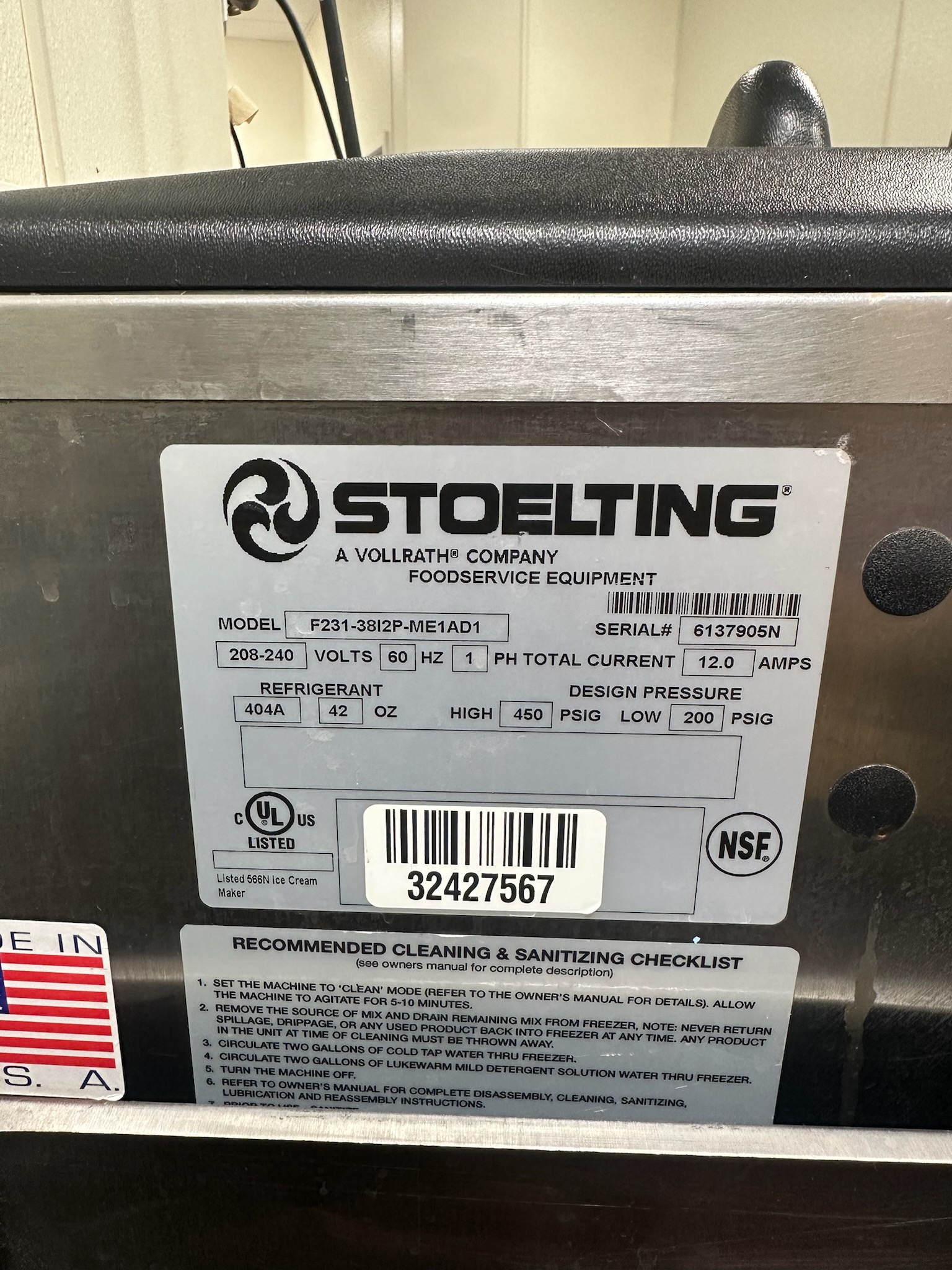
The beater (also called the auger or dasher) is the rotating component inside the freezing cylinder that scrapes frozen product off the cylinder walls and incorporates air into the mix. When the beater wears down, consistency suffers dramatically.
What’s Happening
Stoelting beaters have plastic scraper blades that make contact with the inner surface of the freezing cylinder. Over thousands of hours of operation, these blades wear down and lose their tight seal against the cylinder wall. When that gap widens:
- Ice crystals form on the cylinder wall instead of being scraped off and blended into the product
- Product becomes grainy or chunky with visible ice particles
- Dispensing becomes uneven — some pulls are smooth while others are icy
- The machine works harder because frozen buildup on the cylinder reduces heat transfer efficiency
Signs Your Beater Needs Replacement
- Visible wear on the scraper blades (they should sit flush against the cylinder)
- Ice crystals or frozen chunks in the dispensed product
- The machine takes longer to reach serving consistency
- You hear unusual grinding or scraping sounds during operation
- Product quality varies throughout the day despite consistent mix
What to Do
Beater assemblies are wear items and should be inspected regularly — Stoelting recommends checking them during your weekly deep-cleaning routine. Replacement beaters are available through authorized parts distributors. If you’re not sure whether your beater needs replacement, a commercial appliance technician can measure the blade clearance and advise.
Pro tip from our techs: When replacing beater blades, always inspect the cylinder bore for scoring or damage. A worn beater running too long can scratch the cylinder surface, which then accelerates wear on the new blades.
3. Refrigeration System Problems
The refrigeration system is the heart of your Stoelting machine. When it can’t maintain proper freezing temperatures, you’ll notice consistency issues before you notice anything else.
What’s Happening
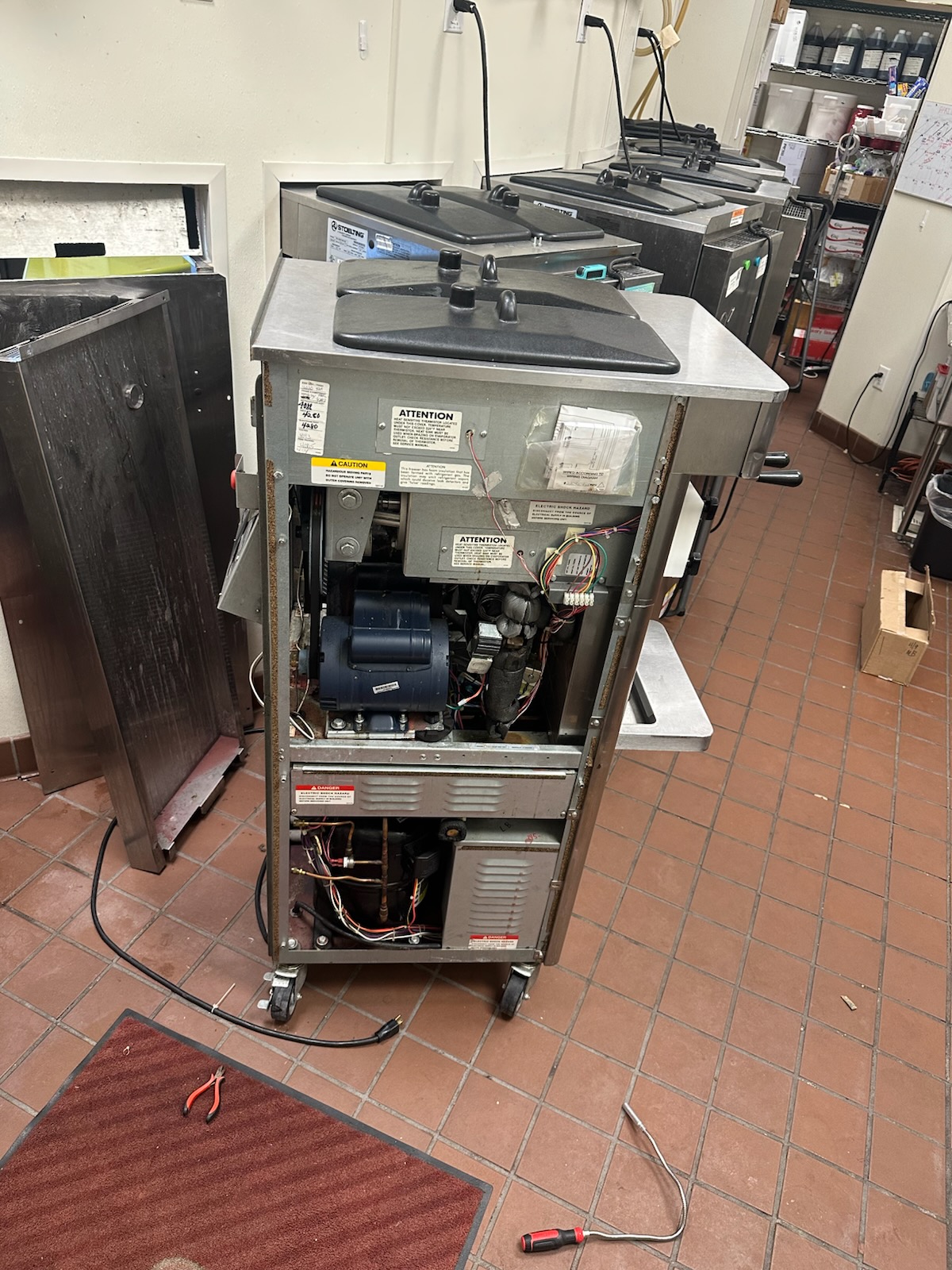
Stoelting frozen yogurt machines use a sealed refrigeration system (compressor, condenser, evaporator, expansion valve) to freeze the mix inside the cylinder. When any component in this system underperforms, the cylinder temperature rises and the product can’t freeze to the proper consistency.
Common Refrigeration Issues
Dirty condenser coils: This is the #1 preventable cause of refrigeration problems in commercial frozen dessert equipment. The condenser releases heat from the refrigerant — when it’s clogged with dust, grease, or debris, heat can’t dissipate efficiently. The compressor works harder, runs hotter, and the cylinder doesn’t get cold enough. Frozen yogurt comes out too soft and won’t hold its shape.
Low refrigerant charge: Refrigerant doesn’t get “used up” — if the level is low, there’s a leak somewhere in the system. Low refrigerant means reduced cooling capacity, resulting in soft, runny product that never reaches proper serving temperature. You might also notice the compressor running continuously without cycling off.
Failing compressor: An aging or failing compressor can’t maintain adequate pressure in the refrigeration circuit. Early signs include the machine taking significantly longer to freeze a batch, inconsistent temperatures throughout the day, or the compressor making unusual clicking or humming sounds at startup.
Blocked expansion valve: The expansion valve controls refrigerant flow into the evaporator. If it’s partially blocked (common with moisture contamination in the system), cooling becomes erratic — the machine may freeze product normally for a while, then suddenly produce soft product.
What to Do
Clean your condenser coils at least monthly — more often in high-dust environments or kitchens with airborne grease. Use a condenser brush and compressed air to remove buildup. This single maintenance step prevents the majority of refrigeration-related consistency problems.
For low refrigerant, compressor issues, or expansion valve problems, you’ll need a certified commercial refrigeration technician. These repairs involve sealed system work that requires EPA certification and specialized equipment.
4. Temperature Sensor or Control Board Malfunction
Stoelting machines use temperature sensors (thermistors) and electronic control boards to regulate the freezing process. When these components drift out of calibration or fail, the machine can’t maintain the precise temperatures needed for consistent product.
What’s Happening
The thermistor monitors the product temperature inside the freezing cylinder and communicates with the control board, which decides when to run the compressor, when to stop the beater, and when the product is ready to serve. If the thermistor reading is off by even a few degrees, the control board makes decisions based on bad data.
Symptoms of Sensor or Control Issues
- Product consistently too soft: The sensor reads colder than actual temperature, so the machine thinks the product is frozen when it isn’t. The machine stops the freezing cycle too early.
- Product consistently too hard: The sensor reads warmer than actual temperature, so the machine keeps freezing past the target. Product becomes overly firm and difficult to dispense.
- Wild temperature swings: A failing sensor may give erratic readings, causing the machine to cycle between overfreezing and underfreezing. Product quality varies wildly from one serving to the next.
- Error codes on display: Many Stoelting models will display temperature-related fault codes when sensor readings fall outside expected ranges.
What to Do
If you suspect a sensor issue, start by checking the display reading against a separate thermometer inserted into the product. A variance of more than 2-3°F suggests the thermistor needs calibration or replacement.
Control board issues are more complex — intermittent board failures can cause inconsistent behavior that’s difficult to reproduce on demand. If you’ve ruled out mix ratios, beater condition, and refrigeration performance, the control board becomes the prime suspect. This is a job for a technician with experience in commercial frozen dessert equipment — not a general HVAC or restaurant equipment tech.
5. Improper Machine Operation and Maintenance
Sometimes the machine is working perfectly, but operational practices are undermining product quality. This is more common than most operators realize.
What’s Happening
Overfilling or underfilling the hopper: Stoelting machines are designed to operate with the mix hopper filled to a specific level. Too much mix overwhelms the freezing capacity — the machine can’t freeze the volume fast enough, resulting in soft product. Too little mix introduces excess air and causes the machine to cycle unevenly.
Adding warm mix to cold mix: Pouring room-temperature or warm mix into a hopper that still contains cold mix creates a temperature shock. The machine’s refrigeration system has to work harder to bring the combined mix back to temperature, and the product dispensed during this recovery period will be inconsistent.
Skipping nightly breakdown cleaning: Stoelting machines should be completely disassembled, cleaned, and sanitized every night (or per your local health department’s requirements). Residual mix left in the cylinder, on the beater, or in the dispensing valve can freeze into chunks that contaminate the next batch. It also creates a breeding ground for bacteria that affects both safety and taste.
Not allowing adequate freeze-down time: After cleaning and reassembly, the machine needs time to freeze the initial batch to serving consistency. Serving product before the machine reaches its target temperature means customers get soft, underfrozen yogurt.
Best Practices for Consistent Product
- Fill the hopper to the recommended level — check your model’s manual for the specific fill line
- Pre-chill mix to 38-40°F before adding it to the hopper
- Never mix fresh and old product in the hopper if possible — use FIFO rotation
- Complete nightly breakdown and cleaning per Stoelting’s guidelines
- Allow full freeze-down before serving (typically 20-45 minutes depending on model and batch size)
- Monitor product temperature during high-volume periods — rapid, repeated dispensing can warm the cylinder
Quick Troubleshooting Guide
| Symptom | Most Likely Cause | First Step |
|---|---|---|
| Too soft / runny | Overrun too high, dirty condenser, refrigeration issue | Check overrun setting, clean condenser |
| Too hard / icy | Overrun too low, sensor reading cold, beater worn | Check overrun, verify sensor accuracy |
| Grainy / ice crystals | Worn beater, inconsistent mix temp | Inspect beater blades, check mix temp |
| Foamy / airy | Excess overrun, air leak in mix system | Reduce overrun, check gaskets and seals |
| Varies throughout day | Sensor drift, mix temp changes, high volume | Check sensor, pre-chill mix, clean condenser |
| Won’t reach consistency | Low refrigerant, compressor issue, extreme heat | Call a certified technician |
Preventive Maintenance Schedule for Stoelting Machines
Keeping your Stoelting machine running at peak consistency requires a consistent maintenance routine:
- Daily: Flush and sanitize the dispensing valve; wipe down exterior surfaces
- Nightly: Complete breakdown, disassemble beater assembly, clean and sanitize all food-contact parts
- Weekly: Inspect beater blades for wear; deep clean the hopper, lid, and mix feed tube
- Monthly: Clean condenser coils; check door gaskets and O-rings for wear; verify temperature calibration
- Quarterly: Professional inspection of refrigeration system, electrical connections, and control board
AMB Works: Central Florida’s Commercial Frozen Equipment Experts
When your Stoelting frozen yogurt machine isn’t producing the quality your customers expect, AMB Works provides same-day commercial appliance repair across Central Florida. We have hands-on experience with Stoelting soft serve and frozen yogurt equipment — from single-flavor countertop units to multi-flavor floor models.
We understand that consistency issues directly impact your customer satisfaction and sales. Our technicians diagnose the root cause quickly and carry common replacement parts to get your machine back to producing perfect product as fast as possible.
Serving frozen yogurt shops, restaurants, and commercial kitchens in Clermont, Orlando, Leesburg, The Villages, Winter Garden, and 25+ cities across Central Florida.
📞 Call now: (352) 757-0949
📱 Text us: (352) 757-0949
🌐 Book online
Related Commercial Repair Guides
- Baker’s Pride Convection Oven Not Heating: 5 Causes
- True Commercial Refrigerator Not Cooling: 5 Causes
- Avantco Refrigerator Not Cooling: Troubleshooting Guide
- TurboChef Oven Error Codes: Complete Guide
Frequently Asked Questions
Why is my Stoelting frozen yogurt machine producing soft product?
The most common causes of soft product are dirty condenser coils restricting cooling capacity, incorrect overrun settings pumping too much air into the mix, or a refrigeration issue such as low refrigerant. Start by cleaning the condenser coils and checking your overrun setting against the mix manufacturer’s recommendation.
How often should I replace the beater blades on a Stoelting machine?
Beater blade replacement frequency depends on usage volume, but most high-volume operations should inspect blades weekly and replace them every 3-6 months. Signs that blades need replacement include visible wear, ice crystals in the product, and the machine taking longer to reach serving consistency.
What causes ice crystals in frozen yogurt from a Stoelting machine?
Ice crystals typically form when the beater blades are worn and can’t properly scrape the cylinder wall, when mix temperature fluctuates due to adding warm mix to cold mix, or when the machine’s freezing cycle is interrupted. Replacing worn beater blades and maintaining consistent mix temperatures usually resolves this issue.
How do I clean the condenser on my Stoelting frozen yogurt machine?
Locate the condenser (usually at the rear or bottom of the unit behind a removable panel). Use a condenser brush to loosen dust and debris, then blow it out with compressed air, directing airflow from inside out. Never use water on electrical components. Clean monthly at minimum — weekly in high-grease environments.
Why does my Stoelting machine produce inconsistent frozen yogurt throughout the day?
Inconsistent product typically results from temperature sensor drift, high-volume dispensing warming the cylinder faster than it can recover, or mix temperature changes as fresh mix is added to the hopper. Pre-chilling mix, allowing recovery time between high-volume periods, and having the thermistor calibrated can resolve day-long inconsistency.
When should I call a technician for my Stoelting machine?
Call a certified commercial appliance technician when you suspect refrigerant leaks (soft product that never firms up, compressor running constantly), electrical or control board issues (error codes, erratic behavior), compressor problems (unusual noises, failure to start), or when basic troubleshooting hasn’t resolved consistency issues after cleaning and checking settings.