
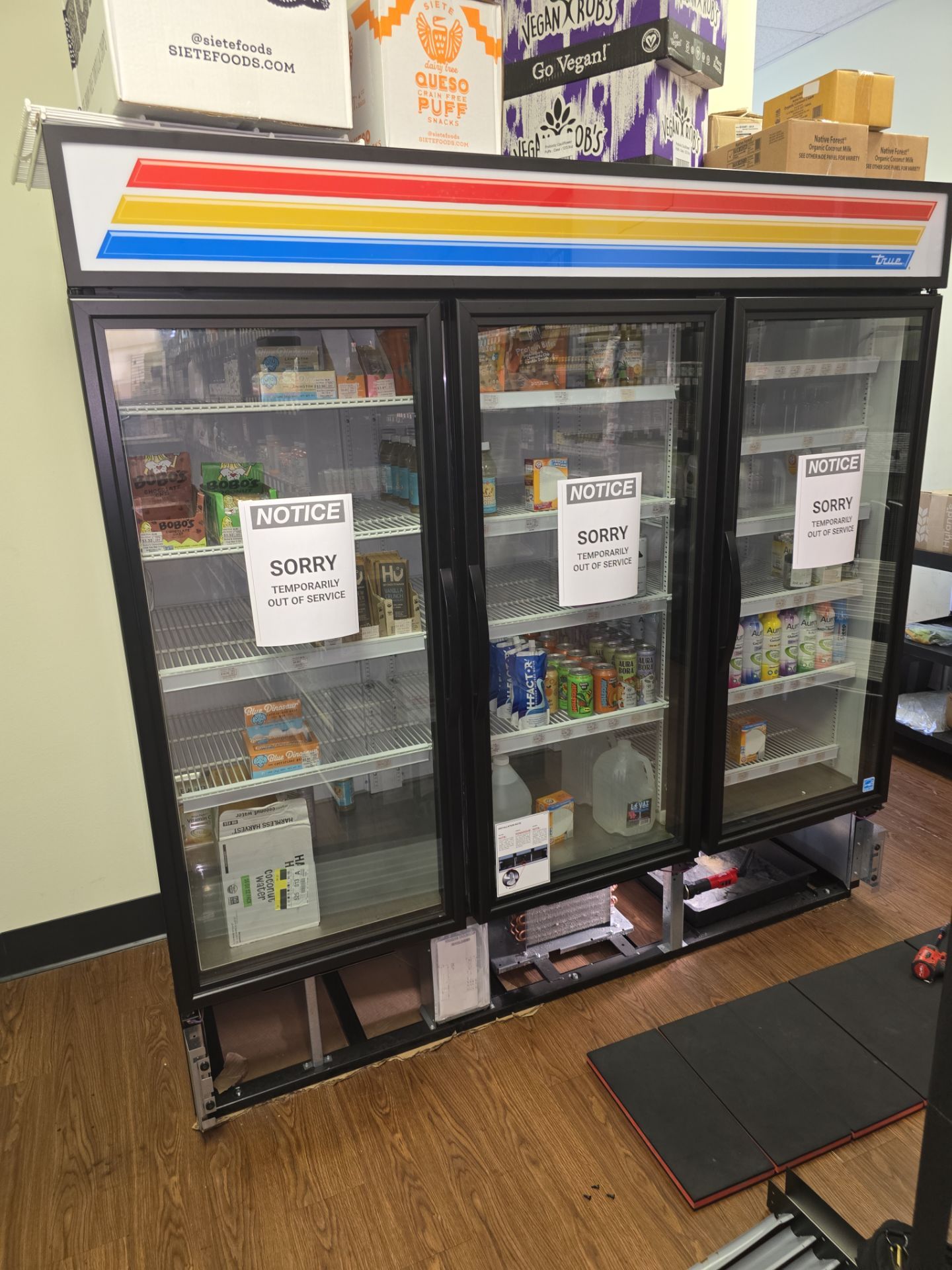
You open up the kitchen before the morning rush and immediately notice something wrong. The True reach-in feels warm. The prep ingredients inside are soft, the internal thermometer reads 15 degrees above where it should be, and you’re already calculating how much product you might lose. Your True commercial refrigerator is not cooling — and in a busy restaurant, every minute of downtime matters.
True Manufacturing builds some of the most reliable commercial refrigeration equipment in the industry — from T-Series reach-ins to GDM glass door merchandisers to TWT prep tables. But even the best-built units develop problems over time, especially in high-volume kitchens where grease, heat, and constant door openings take their toll. The good news? Most cooling failures have identifiable causes that a trained commercial appliance repair technician can diagnose and fix quickly.
AMB-Works’ Top 5 Reasons for a True Commercial Refrigerator Not Cooling
Here are the most common reasons your True commercial refrigerator may not be maintaining temperature — and exactly how our technicians resolve them.
1. Dirty or Grease-Clogged Condenser Coils
What You Might Notice:
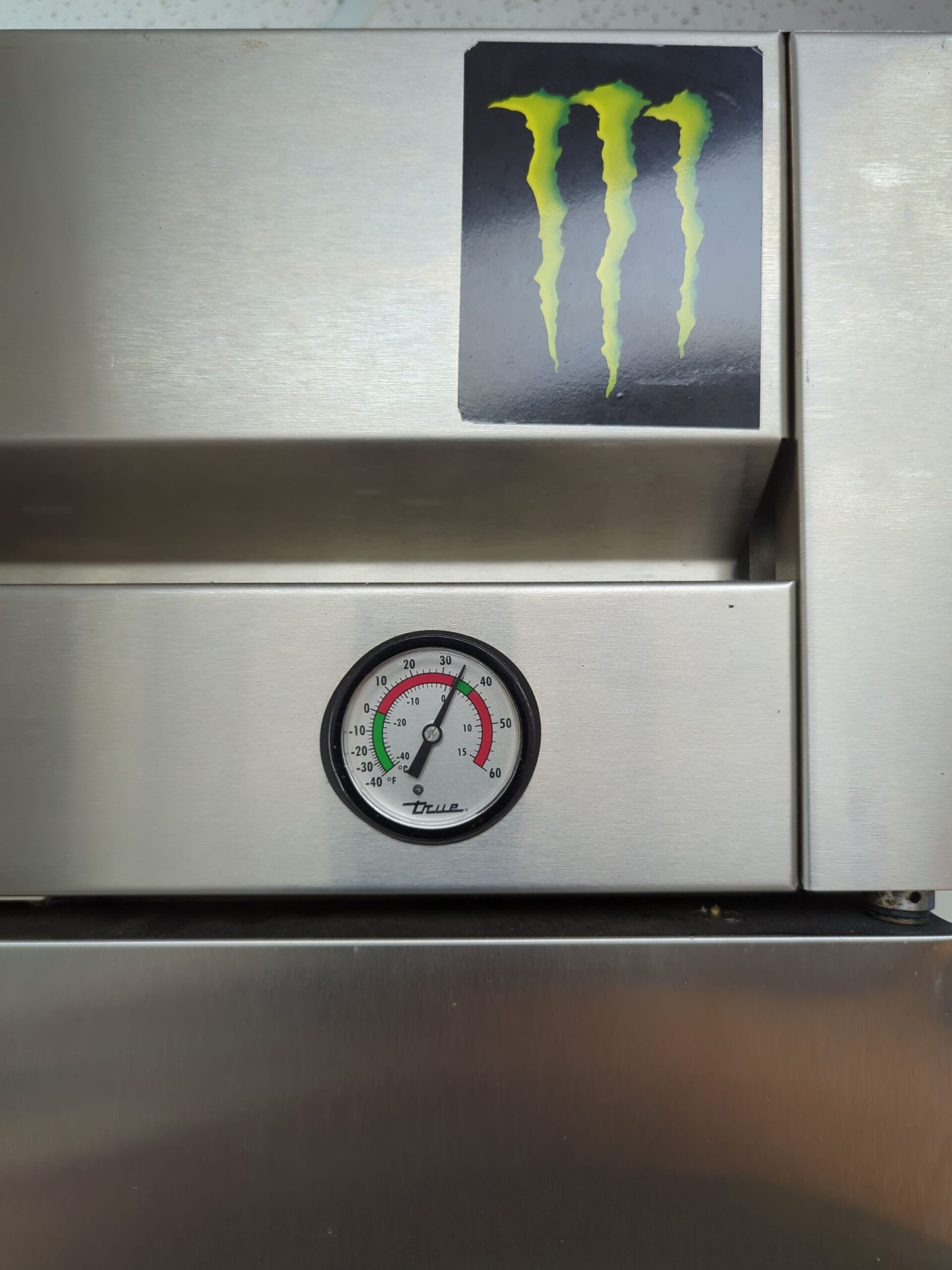
The unit runs constantly but never reaches set temperature. The sides or back panel feel hot to the touch. Your kitchen staff mentions the compressor sounds like it never shuts off. Over time, internal temps slowly creep up from 36°F to 42°F or higher — right into the health code danger zone.
What’s Happening:
In restaurant kitchens, airborne grease, flour dust, and lint accumulate on the coils quickly. When the coils can’t dissipate heat efficiently, the entire refrigeration cycle is compromised. The compressor works overtime trying to compensate, which drives up your energy bill and accelerates wear on expensive components.
This is especially common on True T-Series reach-in models like the T-23, T-49, and T-72, where the condenser is located at the bottom of the unit and sits close to kitchen floors where debris collects.
How We Fix It:
Our technician pulls the unit out, removes the condenser access panel, and thoroughly cleans the coils using commercial-grade brushes and compressed air. We also inspect the condenser fan motor and blade for proper operation, check refrigerant pressures, and verify the compressor isn’t showing signs of heat damage from overwork. For kitchens with heavy grease output, we’ll recommend a cleaning schedule to prevent this from recurring.
2. Worn or Damaged Door Gaskets
What You Might Notice:
You notice condensation or moisture forming around the door frame. The unit seems to cycle on more frequently than usual. When you close the door, it doesn’t seal as tightly as it used to — you can see light escaping around the edges, or a dollar bill slides out easily when placed in the door seal. Internal temperatures fluctuate, especially on shelves near the door.
What’s Happening:
True’s magnetic door gaskets are designed to create an airtight seal every time the door closes. But in commercial settings where doors get opened and closed dozens — sometimes hundreds — of times per day, gaskets wear out. They crack, warp, lose magnetic strength, or collect food residue that prevents a proper seal. Once warm kitchen air starts leaking in, your compressor has to work constantly to compensate, and it still can’t keep up.
This is one of the most overlooked causes of a True commercial refrigerator not cooling. It’s also one of the easiest to fix — and ignoring it leads to much bigger problems down the line.
How We Fix It:
We inspect the gasket around the entire door perimeter, checking for cracks, tears, hardening, or magnetic failure. If the gasket is compromised, we replace it with the correct OEM True gasket for your specific model — whether it’s a GDM-26 merchandiser, a T-49 reach-in, or a TSSU sandwich prep table. We also check door hinges and closers to ensure the door seats properly, since a misaligned door can destroy a brand-new gasket in weeks.
3. Faulty Evaporator Fan Motor
What You Might Notice:
Some areas inside the unit are cold while others are noticeably warmer. The top shelf might be freezing while product on the bottom shelf is at unsafe temperatures. You don’t hear the usual hum of airflow inside the cabinet, or you hear an unusual grinding, squealing, or clicking sound when you open the door. Ice may be building up on the back wall or around the evaporator coil.
What’s Happening:
True commercial refrigerators rely on evaporator fans to circulate cold air evenly throughout the cabinet. When the fan motor fails or slows down, cold air pools near the evaporator coil instead of being pushed across all shelves. This creates hot spots, uneven product temperatures, and frost buildup — all while the compressor keeps running because the thermostat never reads the correct temperature.
On True GDM glass door merchandisers, a failed evaporator fan is especially problematic because customers can see the frost buildup and warm product through the glass — which hurts both food safety and your business appearance.
How We Fix It:
We access the evaporator compartment, test the fan motor for proper voltage and amp draw, and inspect the blades for ice obstruction or mechanical damage. If the motor has failed, we install a genuine True replacement motor, clear any ice buildup from the evaporator coil, and verify that airflow reaches every shelf in the cabinet. We also check the defrost system to make sure frost accumulation isn’t what caused the fan failure in the first place.
4. Thermostat or Digital Controller Malfunction
What You Might Notice:
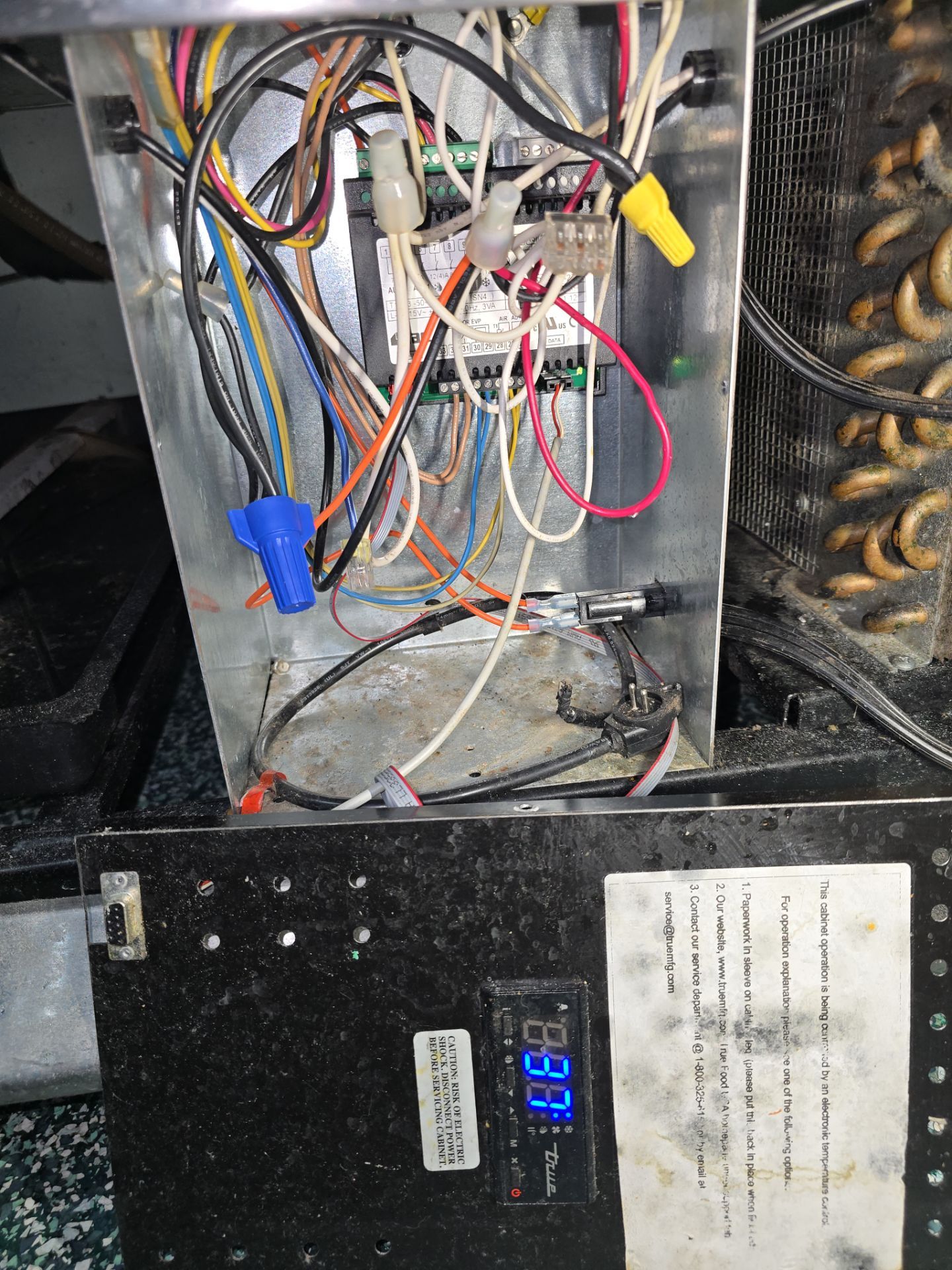
The digital temperature display shows erratic readings — jumping from 35°F to 50°F and back. The unit may short cycle, turning on and off every few minutes instead of running smooth, consistent cycles. Some True models with digital controllers may flash error codes or show a blank display. Your staff keeps adjusting the thermostat but nothing changes.
What’s Happening:
True’s commercial refrigerators use electronic temperature controllers and thermistors (temperature sensors) to regulate cooling cycles. Over time, power surges, moisture exposure, or simple component age can cause these controllers to malfunction. When the controller can’t accurately read the cabinet temperature, it sends incorrect signals to the compressor — either running it too little (warm unit) or too much (frozen product, wasted energy).
On older True models with mechanical thermostats, the thermostat contacts can wear out or the capillary tube can develop leaks, leading to similar temperature control problems.
How We Fix It:
We test the thermistor sensor resistance against True’s factory specifications, check incoming voltage to the controller, and evaluate the control board for visible damage or erratic output signals. If the controller, thermistor, or thermostat has failed, we replace it with the correct True OEM part and calibrate the system to ensure accurate temperature regulation. We also run the unit through multiple cooling cycles to verify stable operation before returning it to service.
Our commercial appliance repair team has seen this issue across True T-Series, GDM, and TWT models throughout Central Florida and can typically resolve it the same day.
5. Compressor Failure
What You Might Notice:
The unit is completely warm inside — nothing is cold. You might hear a clicking sound every few minutes as the compressor tries to start but can’t. Or the unit is completely silent with no vibration or hum at all. In some cases, the compressor runs but makes a loud knocking or rattling noise it never made before. This is the most serious sign of a True commercial refrigerator not cooling.
What’s Happening:
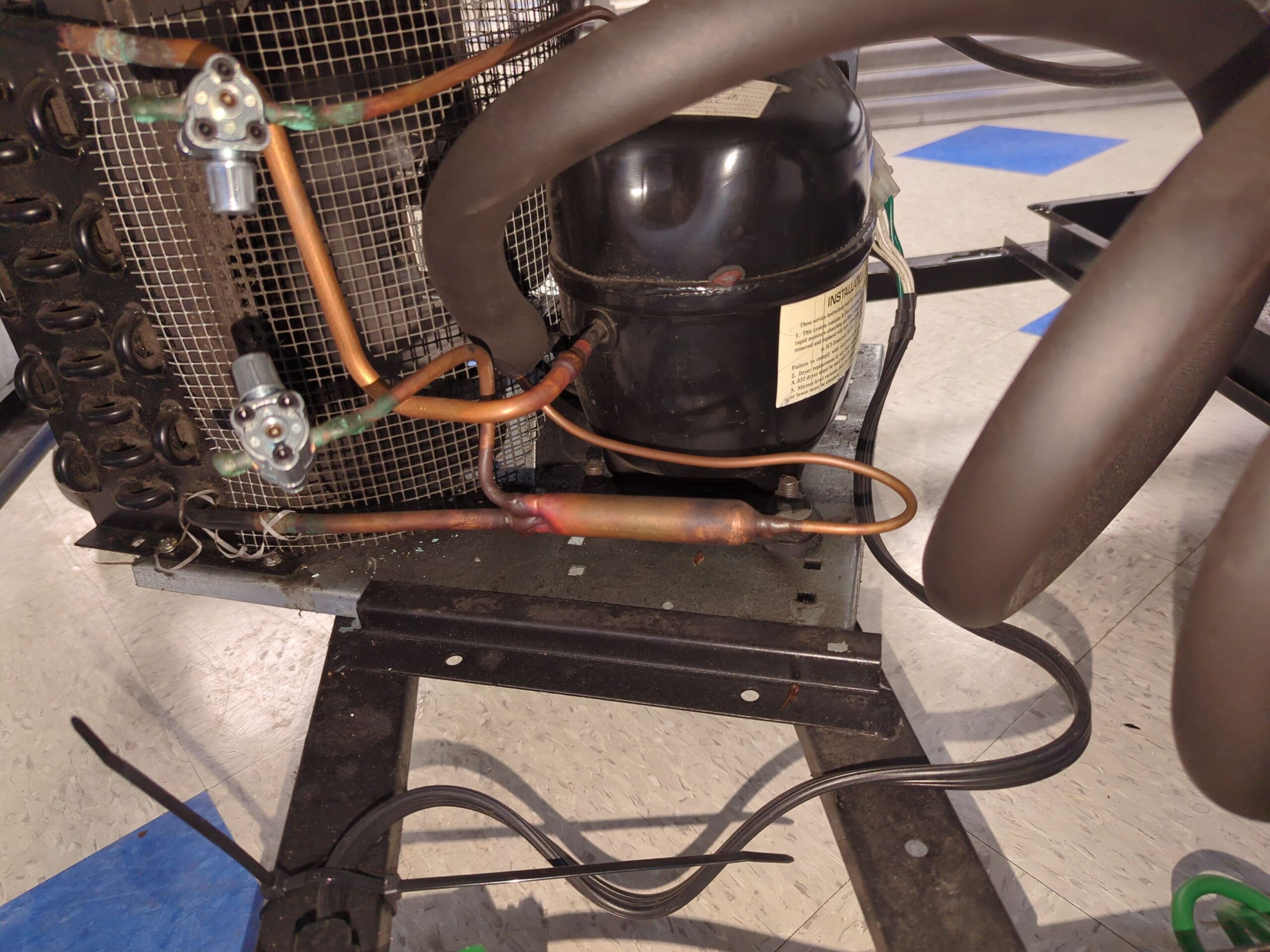
The compressor is the heart of your True refrigerator’s sealed system. It pressurizes refrigerant and drives the entire cooling cycle. Compressors can fail due to prolonged overheating (often from dirty coils or low refrigerant), electrical issues like failed start relays or capacitors, or simply age and wear after years of heavy commercial use. True compressors are built to last, but no compressor runs forever — especially units that operate 24/7 in hot kitchen environments.
How We Fix It:
We perform comprehensive compressor diagnostics including amp draw testing, start relay and capacitor checks, winding continuity and resistance measurements, and system pressure analysis. If the compressor has failed mechanically or electrically, we perform a full compressor replacement following True’s manufacturer specifications. This includes proper system evacuation, brazing, nitrogen purge, vacuum pull-down, and precise refrigerant recharging. We also inspect and replace the filter drier and verify all related components are functioning to prevent premature failure of the new compressor.
Don’t Let a Warm True Refrigerator Cost You Inventory and Revenue
A True commercial refrigerator not cooling isn’t just an inconvenience — it’s a direct threat to your food safety compliance, your inventory investment, and your ability to serve customers. Whether you’re running a T-49 reach-in full of prep ingredients, a GDM merchandiser stocked with beverages, or a TWT prep table loaded for the lunch rush, every hour that unit sits warm costs you money.
At AMB-Works Appliance Repair, we specialize in True commercial refrigeration repair across Clermont, Orlando, and all of Central Florida. Our technicians understand True equipment inside and out — from the T-Series reach-ins to the GDM merchandisers to the TBB back bar coolers. We offer same-day service because we know your business can’t afford to wait.
Need help now? Call us at (352) 757-0949 or book online to get a technician to your location today.
Learn more about True commercial refrigeration equipment on the True Manufacturing website.